1950s–1970s · United States, United Kingdom
Pop Art Graphic Design
Also known as Pop Graphics
Commercial and mass-media imagery elevated to art: soup cans, comic panels, and movie stars in flat, bold color and mechanical Ben-Day dots. Brash, ironic, and unmistakably of the consumer age.
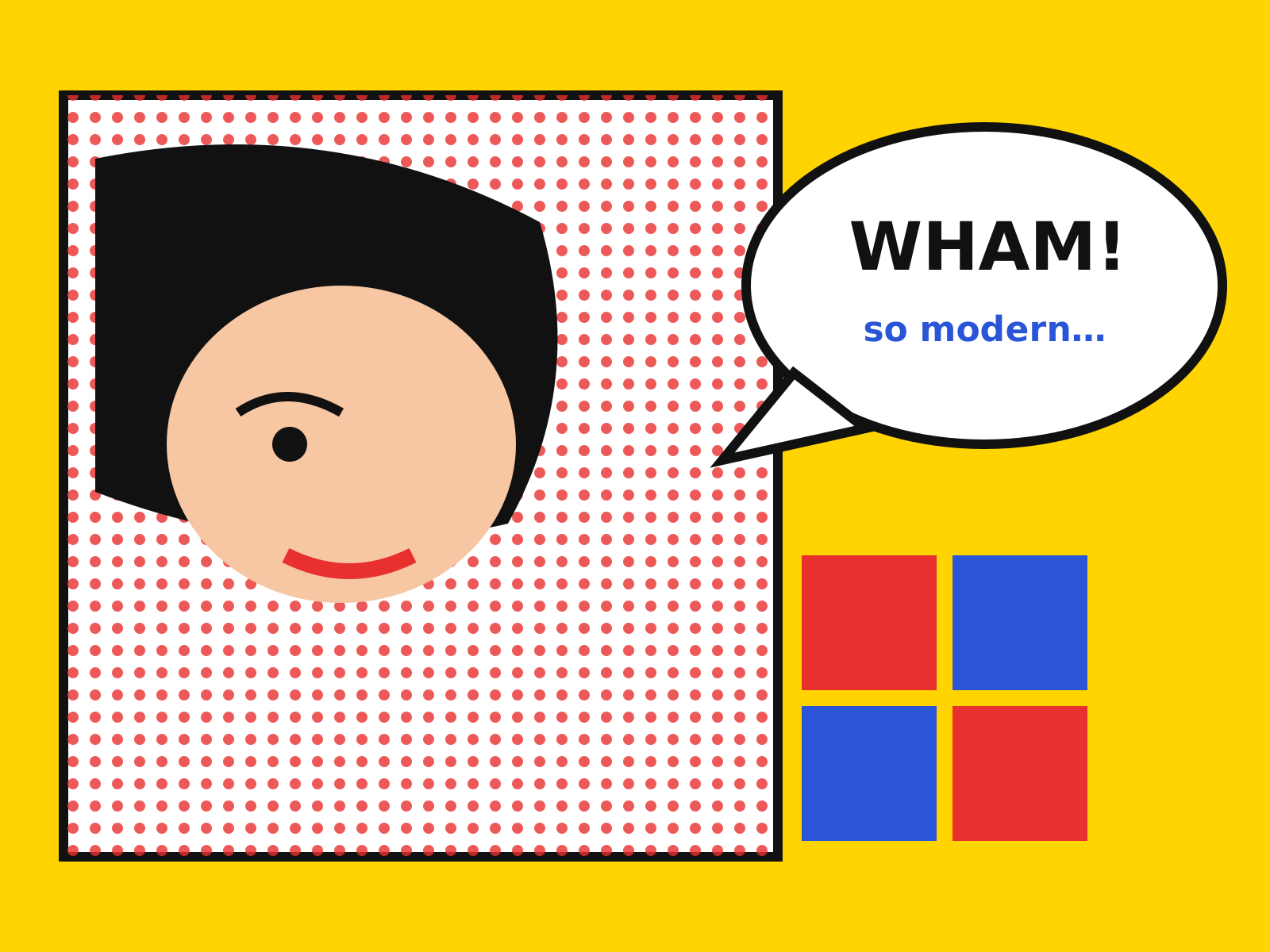
Original specimen, not a historical artifactOriginal specimen in the Pop Art Graphic Design style. Owned; source: Design Style Book (original).
About the style
Pop Art appropriated the imagery of advertising, packaging, comics, and celebrity, recasting commercial visual language as fine art and, in turn, feeding it back into graphic design. Andy Warhol mined product labels and screen idols into repeated, silkscreened grids of flat color, while Roy Lichtenstein magnified comic-strip panels complete with mechanical Ben-Day dots, heavy outlines, and speech balloons. In Britain, Richard Hamilton and Peter Blake assembled collages of consumer iconography, Blake later co-designing the Sgt. Pepper album cover. The shared graphic toolkit favored flat hard-edged color, bold black contour, halftone-dot texture, and the deadpan repetition of mass production. Ironic yet celebratory of consumer culture, Pop reshaped record sleeves, advertising, and editorial design for decades.
Notable examples
- ▸Andy Warhol — Campbell's Soup Cans (1962)
- ▸Roy Lichtenstein — Whaam! (1963)
- ▸Peter Blake — Sgt. Pepper's album cover (1967)
Anatomy of Pop Art Graphic Design
The numbered markers call out the design elements that define this style. Hover or tap a marker to see its breakdown.
Original specimen, not a historical artifactOriginal specimen in the Pop Art Graphic Design style. Owned; source: Design Style Book (original).
Regular grids of mechanical dots mimic cheap commercial printing, used as flat texture rather than realistic shading.
Color is laid in bold, uniform areas with no blending, echoing the look of mass-printed advertising.
A single image — a can, a face — is tiled in a grid, turning mass reproduction itself into the subject.
Soup labels, comic frames, and movie stars are lifted wholesale, blurring the line between ad and artwork.
How Pop Art Graphic Design connects
Styles form a network, not a tree. Explore the direct neighbours below — click any to travel the map one hop at a time.
- Influenced by
- Reaction against
Hover or tap a style to preview it.
Influenced by Comic-Book Graphic Style — lifted Ben-Day dots and panels into fine art and back
Reaction against Swiss Style — embraced commercial imagery the modernists shunned
Streetwear Graphics influenced by Pop Art Graphic Design
Describe it like this
Prompt-ready vocabulary for describing or re-creating the Pop Art Graphic Design look. Tap a word to collect it in Designdeas.
Get copy-ready Pop Art Graphic Design AI prompts →