1950s–1970s · United States, International
Modernist Logo Design
Also known as Modernist Trademark Design, Corporate Identity Modernism
Reductive, geometric trademarks distilled to their simplest memorable form: clean abstract marks and refined logotypes for the corporate age. Timeless, scalable symbols built on modernist clarity.
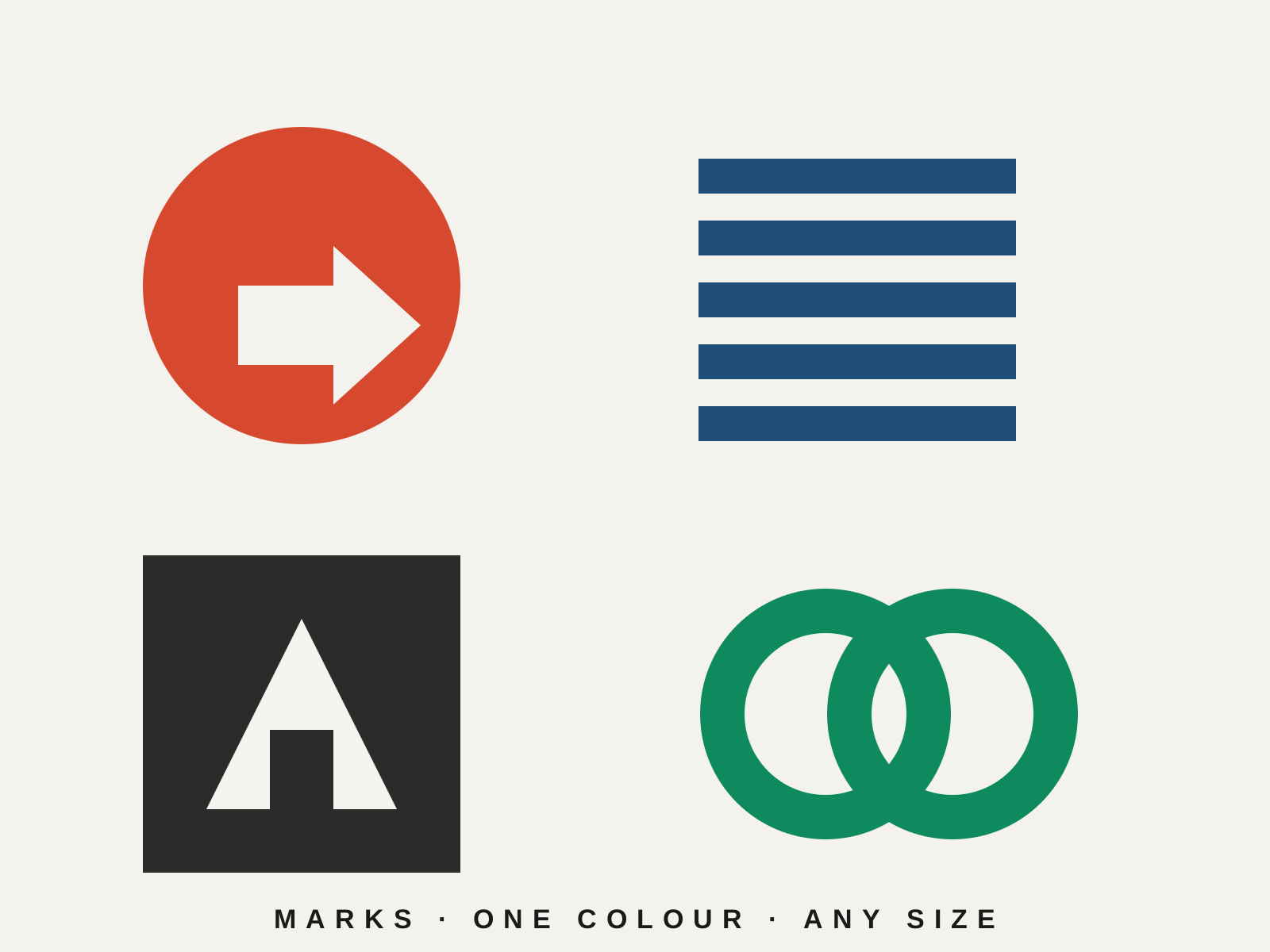
Original specimen, not a historical artifactOriginal specimen in the Modernist Logo Design style. Owned; source: Design Style Book (original).
About the style
Modernist logo design distilled corporate identity into reductive, geometric marks engineered for clarity, memorability, and reproduction at any size. Drawing on Bauhaus and Swiss-modernist principles, designers like Paul Rand, Saul Bass, and the firm Chermayeff & Geismar pared brands down to simple abstract symbols or refined logotypes in flat, often single colors. Rand's IBM and ABC marks, Bass's geometric corporate symbols, and Chermayeff & Geismar's Chase Manhattan octagon — among the first purely abstract American corporate logos — exemplified the belief that a great mark should be simple, appropriate, and enduring rather than decorative. The work emphasized geometric construction, negative space, and systematic application across stationery, signage, and advertising. This reductive trademark tradition established the template for modern branding and remains the benchmark for logo design.
Notable examples
- ▸Chermayeff & Geismar — Chase Manhattan Bank logo (1960)
- ▸Paul Rand — IBM striped logo (1972)
- ▸Saul Bass — Bell System logo (1969)
Anatomy of Modernist Logo Design
The numbered markers call out the design elements that define this style. Hover or tap a marker to see its breakdown.
Original specimen, not a historical artifactOriginal specimen in the Modernist Logo Design style. Owned; source: Design Style Book (original).
The brand is distilled to its simplest possible geometric form, prizing memorability over ornament.
Empty space is shaped deliberately, often forming a second image or letter within the mark.
The symbol works in one flat color, ensuring it reproduces cleanly at any size and on any medium.
The mark is designed to hold up consistently across stationery, signage, and advertising as a unified identity.
How Modernist Logo Design connects
Styles form a network, not a tree. Explore the direct neighbours below — click any to travel the map one hop at a time.
- Evolved from
- Influenced by
Hover or tap a style to preview it.
Evolved from Mid-Century Modern Graphic Design — the trademark wing of postwar American modernism
Influenced by Bauhaus Graphic Design
Influenced by Swiss Style
Describe it like this
Prompt-ready vocabulary for describing or re-creating the Modernist Logo Design look. Tap a word to collect it in Designdeas.
Get copy-ready Modernist Logo Design AI prompts →