1960s–1980s · Germany, United States, International
Pictogram & Wayfinding Systems
Also known as Wayfinding Symbols, Sign Systems
Coordinated families of geometric figures for signage and wayfinding, built on a shared grid so every symbol reads as one consistent system. Reductive, universal pictograms that guide crowds without words.
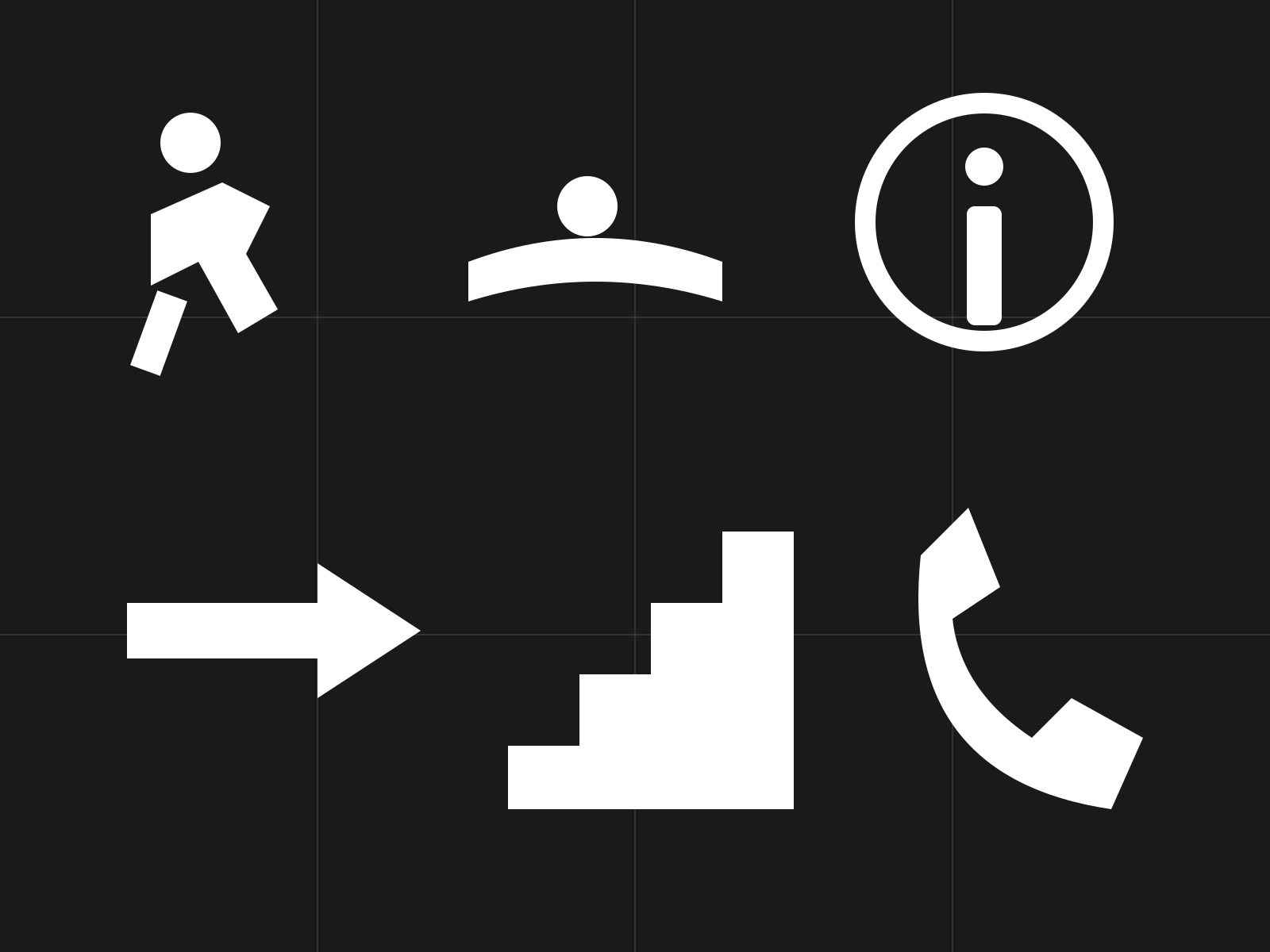
Original specimen, not a historical artifactOriginal specimen in the Pictogram & Wayfinding Systems style. Owned; source: Design Style Book (original).
About the style
Modern pictogram systems sought a universal, language-independent visual code for public navigation, reaching a high point with Otl Aicher's program for the 1972 Munich Olympics. Aicher constructed his sports and facility pictograms on a strict grid of verticals, horizontals, and 45-degree diagonals, so that every figure shared the same modular geometry and read as a coherent family. The same systematic logic produced the U.S. DOT/AIGA symbol set of 1974, a public-domain library of travel and transportation pictograms designed for airports and stations. These systems reduced human figures and objects to clean, jointless geometric silhouettes optimized for instant recognition at distance and small size. Codifying consistency, modularity, and neutrality, they set the global standard for wayfinding and remain ubiquitous in airports, transit, and public buildings.
Notable examples
- ▸Otl Aicher — Munich 1972 Olympics pictograms (1972)
- ▸AIGA/DOT — Symbol Signs transportation set (1974)
- ▸Otl Aicher — Frankfurt Airport sign system (1970s)
Anatomy of Pictogram & Wayfinding Systems
The numbered markers call out the design elements that define this style. Hover or tap a marker to see its breakdown.
Original specimen, not a historical artifactOriginal specimen in the Pictogram & Wayfinding Systems style. Owned; source: Design Style Book (original).
Every figure is built on the same grid of verticals, horizontals, and 45-degree diagonals so the whole set feels unified.
Human bodies are simplified to clean, often jointless geometric shapes for instant recognition.
Uniform line thickness and proportion across all symbols make the system read as one coherent family.
Forms are optimized to be read quickly at small size or from afar, the core demand of wayfinding.
How Pictogram & Wayfinding Systems connects
Styles form a network, not a tree. Explore the direct neighbours below — click any to travel the map one hop at a time.
- Evolved from
- Influenced by
Hover or tap a style to preview it.
Evolved from ISOTYPE Pictography — Neurath's pictograms systematized for wayfinding
Influenced by Swiss Style
Describe it like this
Prompt-ready vocabulary for describing or re-creating the Pictogram & Wayfinding Systems look. Tap a word to collect it in Designdeas.
Get copy-ready Pictogram & Wayfinding Systems AI prompts →