1920s–1940s · Austria, United Kingdom
ISOTYPE Pictography
Also known as Vienna Method of Pictorial Statistics, Isotype
A system of pictorial statistics that conveys quantities by repeating simplified, standardized pictograms rather than scaling them. Clear, language-independent infographics built from a disciplined visual vocabulary.
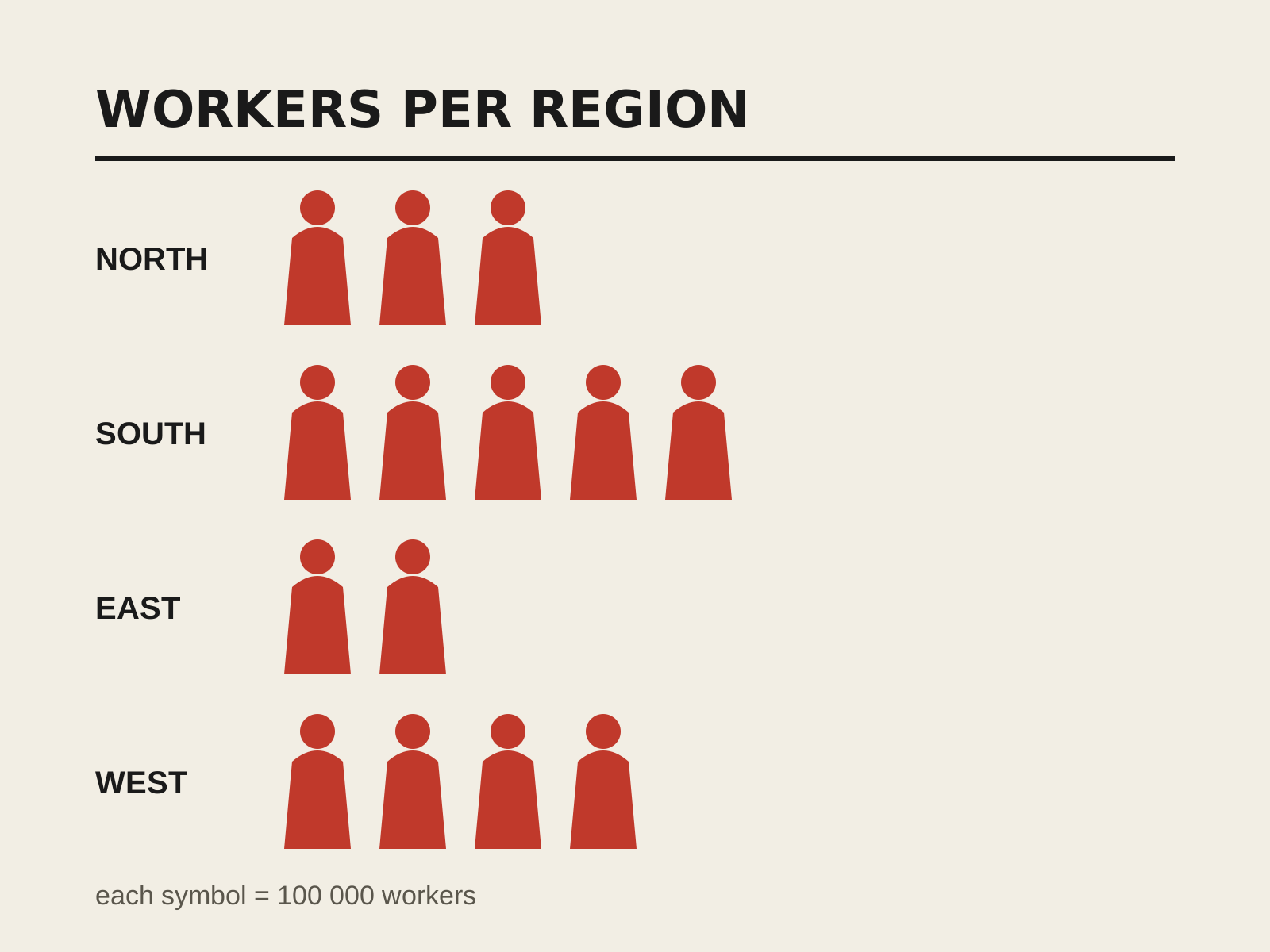
Original specimen, not a historical artifactOriginal specimen in the ISOTYPE Pictography style. Owned; source: Design Style Book (original).
About the style
ISOTYPE — the International System of Typographic Picture Education — was developed in 1920s Vienna by the social scientist Otto Neurath with the artist Gerd Arntz, originally as the Vienna Method of Pictorial Statistics. Its core principle was that greater quantities should be shown by repeating a standardized pictogram, not by enlarging a single one, so that each symbol represented a fixed unit and bars of icons could be compared at a glance. Arntz designed crisp, geometric, frontal pictograms of workers, machines, and goods, reduced to flat silhouettes legible across languages and literacy levels. Laid out on clear grids with restrained color coding, ISOTYPE aimed to democratize statistical understanding for a broad public. It became a foundational model for modern infographics, data visualization, and the standardized pictogram systems that followed.
Notable examples
- ▸Otto Neurath & Gerd Arntz — Gesellschaft und Wirtschaft atlas (1930)
- ▸Gerd Arntz — ISOTYPE pictogram library (1920s–30s)
- ▸Otto Neurath — Modern Man in the Making (1939)
Anatomy of ISOTYPE Pictography
The numbered markers call out the design elements that define this style. Hover or tap a marker to see its breakdown.
Original specimen, not a historical artifactOriginal specimen in the ISOTYPE Pictography style. Owned; source: Design Style Book (original).
More of a quantity is shown by adding more identical icons in a row, not by making one icon bigger.
Each symbol is a crisp, frontal geometric silhouette stripped to its most legible essentials.
Every pictogram stands for a set number, so viewers can literally count meaning across the chart.
Icons line up on a clear grid so rows of data can be compared instantly at a glance.
How ISOTYPE Pictography connects
Styles form a network, not a tree. Explore the direct neighbours below — click any to travel the map one hop at a time.
- Influenced by
- Evolved from
- Parallel / cross-current
Hover or tap a style to preview it.
Influenced by Constructivist Graphics
Influenced by De Stijl Graphics
Pictogram & Wayfinding Systems evolved from ISOTYPE Pictography — Neurath's pictograms systematized for wayfinding
Fluxus Graphic influenced by ISOTYPE Pictography — borrows the deadpan boxed-grid, diagrammatic logic
Infographic Design parallel / cross-current ISOTYPE Pictography — Neurath's pictorial statistics is a key branch of information design
Describe it like this
Prompt-ready vocabulary for describing or re-creating the ISOTYPE Pictography look. Tap a word to collect it in Designdeas.
Get copy-ready ISOTYPE Pictography AI prompts →