1960s–1970s · United States
Supergraphics
Also known as Environmental Supergraphics, Architectural Supergraphics
Enormous, bold typographic and geometric forms painted directly onto walls and buildings, scaled to architecture itself. Hard-edged color shapes and giant letters that reshape how a space is perceived.
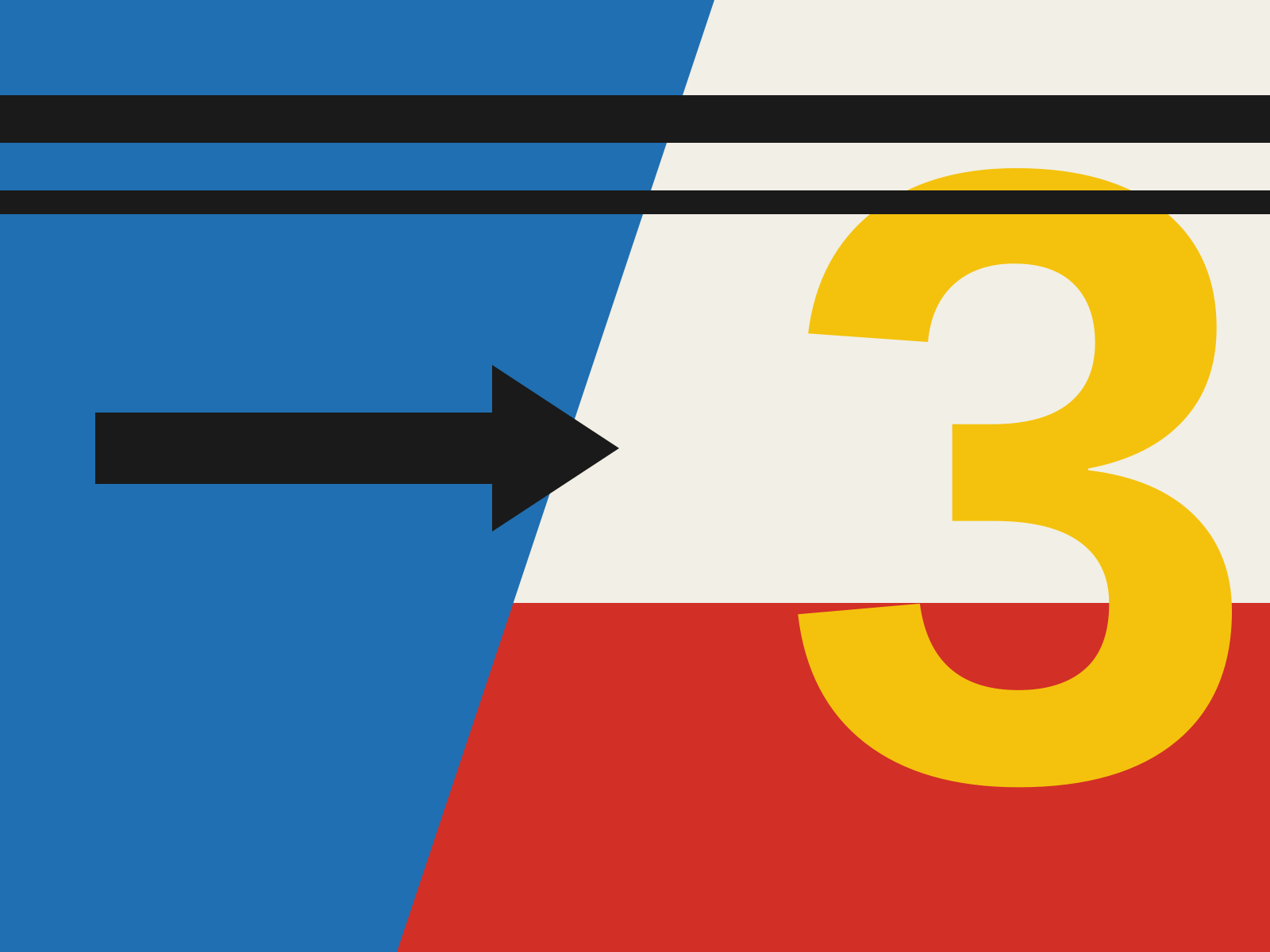
Original specimen, not a historical artifactOriginal specimen in the Supergraphics style. Owned; source: Design Style Book (original).
Across disciplines
- Architecture: Mid-Century Modern
About the style
Supergraphics applied graphic design at architectural scale, painting oversized letters, numerals, stripes, arrows, and hard-edged color fields directly onto interior and exterior walls. Pioneered by Barbara Stauffacher Solomon, whose bold Swiss-modernist murals for the Sea Ranch Athletic Club (1966) helped launch the movement, the approach used flat planes of saturated color and giant type to energize, reorient, and visually restructure plain architecture. The forms ignored conventional sign scale, wrapping corners, spanning whole facades, and treating the building as a canvas for pure geometry. Aligned with the optimism and graphic boldness of late-1960s design, supergraphics blurred the boundary between graphic design, interior space, and architecture. The mode influenced wayfinding, retail environments, and a continuing tradition of large-scale environmental typography.
Notable examples
- ▸Barbara Stauffacher Solomon — Sea Ranch Athletic Club murals (1966)
- ▸Charles Moore — Sea Ranch supergraphic interiors (1960s)
- ▸Barbara Stauffacher Solomon — supergraphics, late 1960s–70s
Anatomy of Supergraphics
The numbered markers call out the design elements that define this style. Hover or tap a marker to see its breakdown.
Original specimen, not a historical artifactOriginal specimen in the Supergraphics style. Owned; source: Design Style Book (original).
Letters and numerals are blown up to span entire walls, treating the building itself as the layout.
Flat fields of saturated color meet in crisp edges, organizing the space with pure geometry.
Stripes and shapes turn corners and run across multiple surfaces, ignoring conventional framing.
Bold graphics visually redefine the perception of plain architecture, making flat walls feel dynamic.
How Supergraphics connects
Styles form a network, not a tree. Explore the direct neighbours below — click any to travel the map one hop at a time.
- Influenced by
- Parallel / cross-current
Hover or tap a style to preview it.
Influenced by Swiss Style — hard-edged Swiss form blown up to architectural scale
Parallel / cross-current Mid-Century Modern
Compare side by side
Describe it like this
Prompt-ready vocabulary for describing or re-creating the Supergraphics look. Tap a word to collect it in Designdeas.
Get copy-ready Supergraphics AI prompts →