1982 · United Kingdom, United States
Arial
Also known as Monotype Arial, Sonoran Sans
Monotype's 1982 metric-compatible substitute for Helvetica — drawn to occupy the exact same widths so it could swap in without reflowing text, and shipped on every Windows PC since. A neo-grotesque defined by what it imitates.
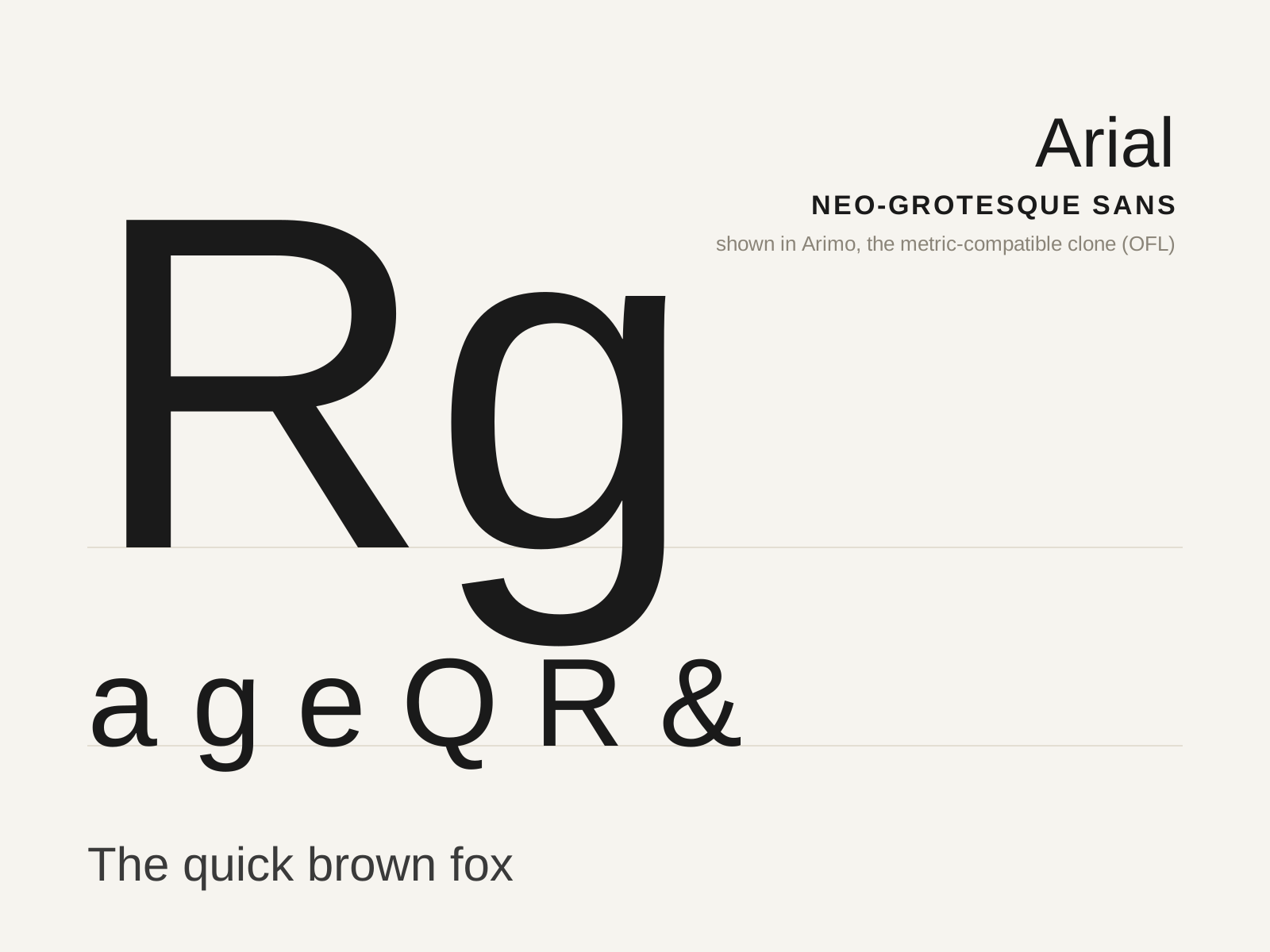
Original specimen, not a historical artifactType specimen — Arial (Neo-grotesque sans); shown in Arimo, the metric-compatible clone (OFL). Owned; source: Design Style Book (original specimen).
About the style
Arial was created in 1982 by Robin Nicholas and Patricia Saunders at Monotype, expressly engineered as a metric-compatible substitute for Helvetica: every character occupies the identical width, so Arial can stand in for Helvetica without altering line breaks or page layout, while side-stepping Helvetica's licensing. Though its skeleton borrows from Monotype Grotesque, the proportions track Helvetica so closely that the two are routinely confused — yet Arial reveals itself through a handful of tells. Its stroke terminals are cut on a slight angle rather than the strict horizontals and verticals of Helvetica, its capital R sports a straighter, splayed leg, its capital G lacks a spur, and the tail of the lowercase t and the leg of the R differ on close inspection. Bundled with Windows and Microsoft Office from the early 1990s, Arial became one of the most widely distributed typefaces on Earth — and a perennial target of designers who regard it as a soulless knockoff.
Notable examples
- ▸Robin Nicholas & Patricia Saunders — Arial (Monotype, 1982)
- ▸Bundled default on Microsoft Windows and Office
- ▸TrueType core fonts for the Web (1996)
Anatomy of Arial
The numbered markers call out the design elements that define this style. Hover or tap a marker to see its breakdown.
Original specimen, not a historical artifactType specimen — Arial (Neo-grotesque sans); shown in Arimo, the metric-compatible clone (OFL). Owned; source: Design Style Book (original specimen).
Arial's capital R has a straighter, slightly splayed leg — the single quickest way to distinguish it from Helvetica's curved, tucked leg.
Arial uses a double-story g in the neo-grotesque manner, drawn close to Helvetica's but set on the same Helvetica-matched widths.
The double-story a has a closed aperture much like Helvetica's; the giveaway is elsewhere, since Arial was built to mimic these proportions.
In running text Arial is deliberately near-indistinguishable from Helvetica — its whole purpose is to occupy the same metrics, only revealing itself in the angled terminals and R leg.
How Arial connects
Styles form a network, not a tree. Explore the direct neighbours below — click any to travel the map one hop at a time.
- Evolved from
- Influenced by
Hover or tap a style to preview it.
Evolved from Helvetica — the metric-compatible substitute that occupies Helvetica's exact widths
Influenced by Grotesque Sans-serif — its skeleton borrows from Monotype Grotesque
Compare side by side
Describe it like this
Prompt-ready vocabulary for describing or re-creating the Arial look. Tap a word to collect it in Designdeas.
Get copy-ready Arial AI prompts →