1957 · Switzerland
Helvetica
Also known as Neue Haas Grotesk
The defining neo-grotesque sans — Max Miedinger and Eduard Hoffmann's 1957 face engineered for neutral, even, almost invisible text, and the typographic voice of postwar corporate modernism.
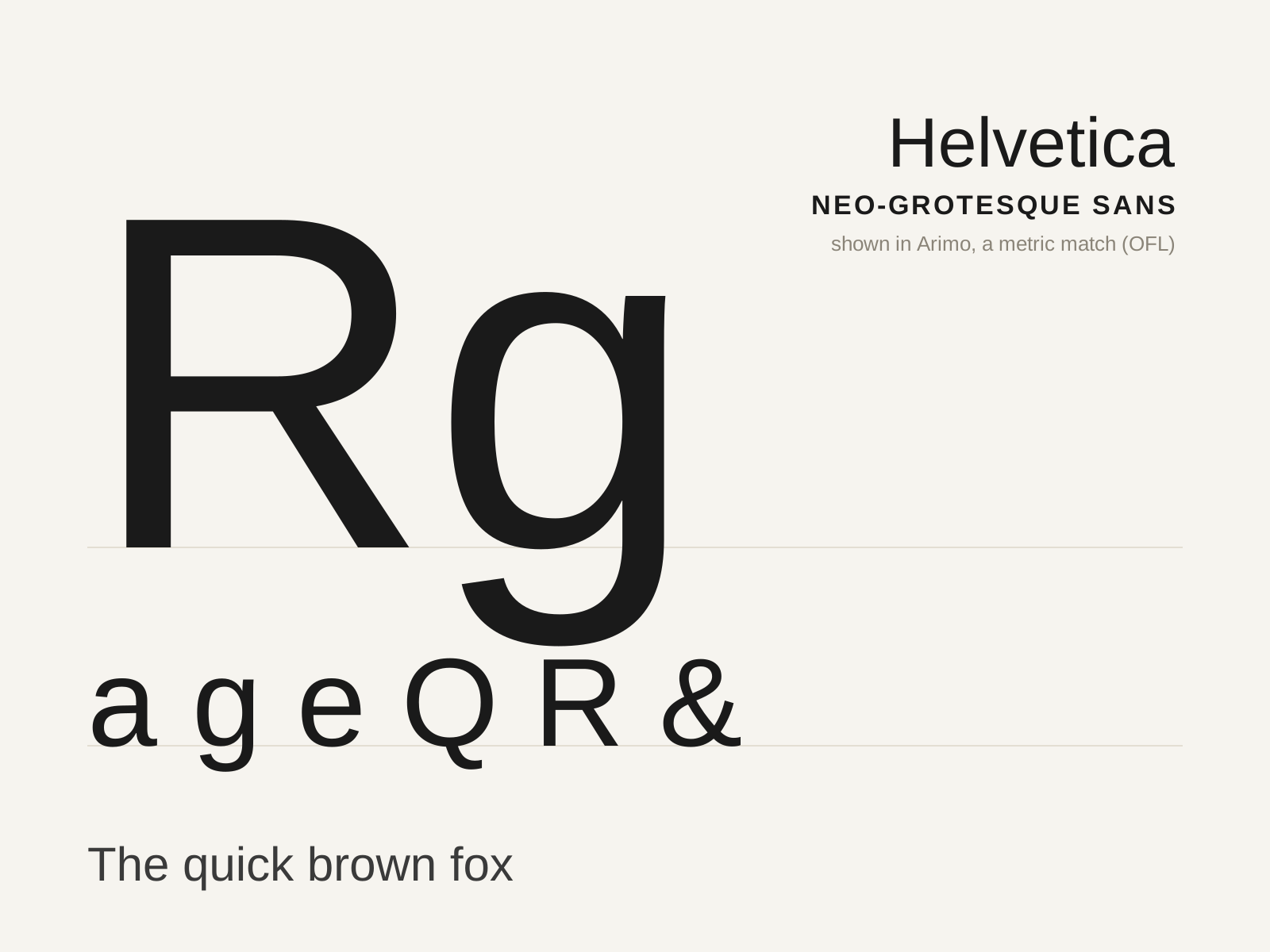
Original specimen, not a historical artifactType specimen — Helvetica (Neo-grotesque sans); shown in Arimo, a metric match (OFL). Owned; source: Design Style Book (original specimen).
Across disciplines
- Graphic Design: Swiss Style
About the style
Helvetica, drawn by Max Miedinger with Eduard Hoffmann at the Haas foundry in 1957 (originally Neue Haas Grotesk), set out to perfect the late-nineteenth-century grotesque into something neutral and rational. Its hallmarks are a high x-height, tightly fitted spacing, horizontally or vertically cut stroke terminals, and remarkably even, monoline strokes that suppress any authorial 'voice'. Adopted as the workhorse of the Swiss/International Typographic Style and then by countless corporations, governments, and transit systems, it became the most ubiquitous typeface of the twentieth century — to admirers a model of clarity, to critics a bland default. Its commercial success spawned the metric-compatible knockoff Arial, and its fiftieth anniversary even earned a documentary film.
Notable examples
- ▸Max Miedinger & Eduard Hoffmann — Neue Haas Grotesk (1957)
- ▸American Airlines identity (Vignelli era, 1967)
- ▸NYC Subway signage (standardized on Helvetica)
Anatomy of Helvetica
The numbered markers call out the design elements that define this style. Hover or tap a marker to see its breakdown.
Original specimen, not a historical artifactType specimen — Helvetica (Neo-grotesque sans); shown in Arimo, a metric match (OFL). Owned; source: Design Style Book (original specimen).
The capital R ends in a curved leg that tucks back toward the stem — a quick way to tell Helvetica from its knockoff Arial, whose leg is straighter.
A double-story g with stroke ends cut on strict horizontals and verticals — the rational, machined feel of the neo-grotesque.
The double-story a has a closed aperture and gently squared bowl, contributing to the uniform, even texture.
In running text the high x-height and tight fit read as deliberately neutral — the quality that made it the default of postwar corporations.
How Helvetica connects
Styles form a network, not a tree. Explore the direct neighbours below — click any to travel the map one hop at a time.
- Evolved from
- Parallel / cross-current
- Reaction against
- Influenced by
Hover or tap a style to preview it.
Evolved from Akzidenz-Grotesk — drawn to perfect the Berthold grotesque
Parallel / cross-current Swiss Style — the literal voice of the Swiss style
Reaction against Garalde (Old-style) — neutral sans set against old-style calligraphic warmth
Arial evolved from Helvetica — the metric-compatible substitute that occupies Helvetica's exact widths
Roboto influenced by Helvetica
Describe it like this
Prompt-ready vocabulary for describing or re-creating the Helvetica look. Tap a word to collect it in Designdeas.
Get copy-ready Helvetica AI prompts →