1722 · England, London
Caslon
Also known as English old-style
William Caslon's sturdy English old-style of the 1720s — slightly irregular, immensely practical, and so trustworthy it set the U.S. Declaration of Independence. 'When in doubt, use Caslon.'
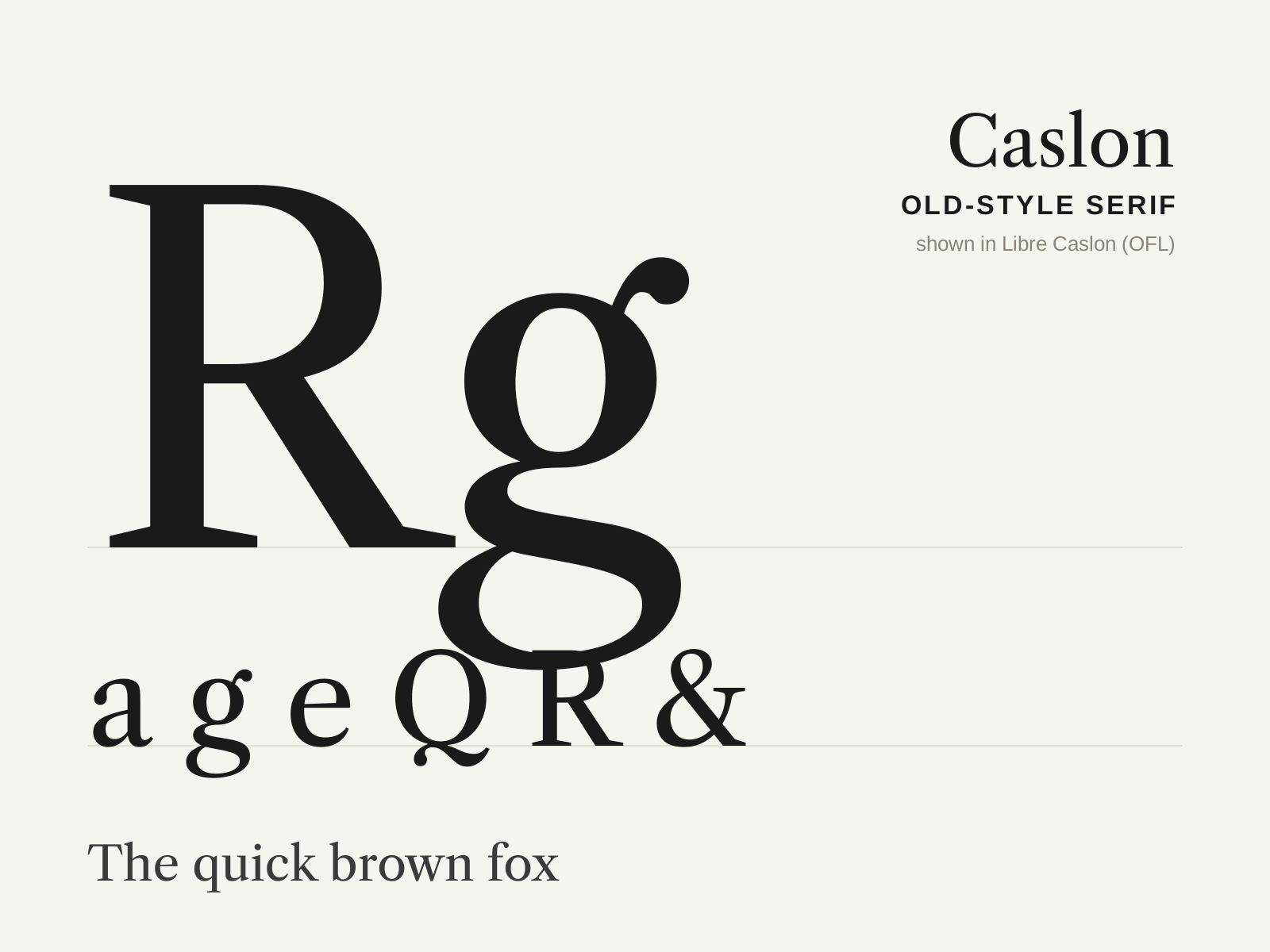
Original specimen, not a historical artifactType specimen — Caslon (Old-style serif); shown in Libre Caslon (OFL). Owned; source: Design Style Book (original specimen).
About the style
William Caslon cut his first romans in London around 1722, drawing on Dutch Baroque models to produce an English old-style of exceptional practicality. Caslon's types are not the most elegant old-styles, but their slight irregularity, sturdy serifs, moderate contrast, and robust, comfortable color made them supremely legible and forgiving across sizes — qualities that earned the printer's maxim 'when in doubt, use Caslon.' Diagnostic details include the high-waisted capital A, the bottom serif on the 'C', a tail-less or short-tailed 'a', and the characteristically perky italic. Carried to the American colonies, Caslon set the Declaration of Independence and the first printings of the Constitution. It matters as the type that anchored English and Anglo-American printing for over a century and remains a touchstone of dependable, unfussy book typography.
Notable examples
- ▸William Caslon — Caslon specimen sheet (London, 1734)
- ▸United States Declaration of Independence (Dunlap broadside, 1776)
- ▸Caslon revivals — Adobe Caslon (Carol Twombly, 1990)
Anatomy of Caslon
The numbered markers call out the design elements that define this style. Hover or tap a marker to see its breakdown.
Original specimen, not a historical artifactType specimen — Caslon (Old-style serif); shown in Libre Caslon (OFL). Owned; source: Design Style Book (original specimen).
Caslon's capital R has a solid bowl and a straight, slightly splayed leg on firm bracketed serifs — dependable and unfussy rather than refined.
The lowercase g is two-storey with a sturdy bowl, a closed lower loop, and a small ear, drawn for legibility over elegance.
The lowercase a is two-storey with a moderate aperture and a robust top terminal, part of Caslon's practical, slightly irregular character.
Running text reads warm, robust, and forgiving — the dependable color behind the maxim 'when in doubt, use Caslon.'
How Caslon connects
Styles form a network, not a tree. Explore the direct neighbours below — click any to travel the map one hop at a time.
- Evolved from
- Influenced by
Hover or tap a style to preview it.
Evolved from Garalde (Old-style) — the English old-style standard
Baskerville influenced by Caslon
Compare side by side
Describe it like this
Prompt-ready vocabulary for describing or re-creating the Caslon look. Tap a word to collect it in Designdeas.
Get copy-ready Caslon AI prompts →