1780s–1820s · Italy, France
Didone (Modern) Serif
Also known as Modern serif, Modern face
The rationalist serif at its most extreme — hairline-thin thins against heavy stems, a strictly vertical axis, and flat, unbracketed serifs. Dazzling, high-fashion, and unmistakably 'modern'.
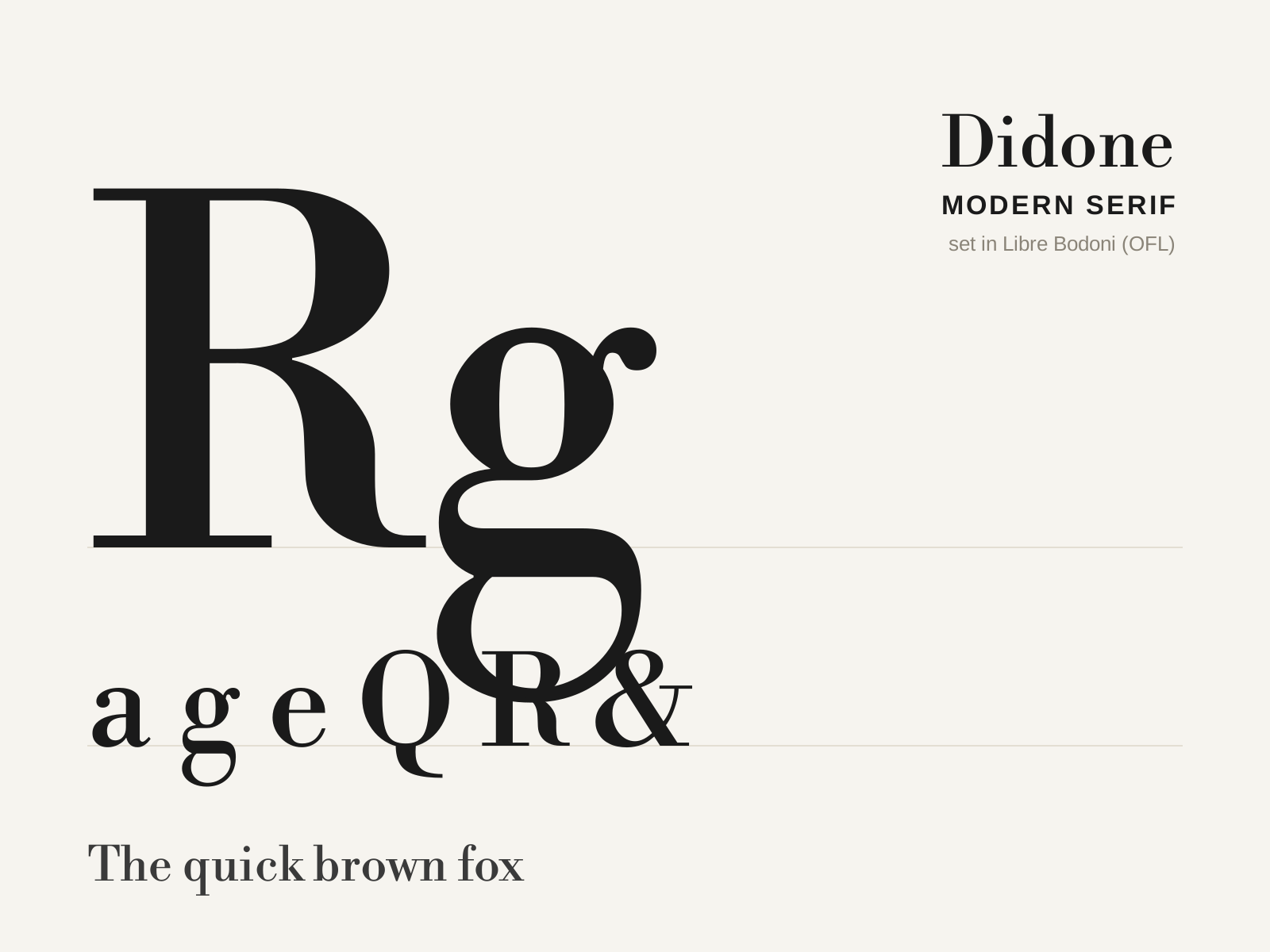
Original specimen, not a historical artifactType specimen — Didone (Modern) Serif (Modern serif); set in Libre Bodoni (OFL). Owned; source: Design Style Book (original specimen).
About the style
Didone — a portmanteau of Didot and Bodoni — names the high-contrast 'modern' serif that emerged in the late eighteenth century from the workshops of Firmin Didot in Paris and Giambattista Bodoni in Parma. It pushes the transitional tendencies to their limit: a dramatic contrast between hairline thins and heavy stems, a strictly vertical axis of stress, and flat, thin, unbracketed (or barely bracketed) serifs that meet the stems at a sharp right angle. Ball terminals replace the pen's teardrops, and the overall effect is geometric, crisp, and coolly elegant rather than warm. Born of Enlightenment rationalism and improved presses, papers, and inks, the Didone became the face of Empire-era luxury; its glittering, vertical-stress contrast makes it superb for display and fashion mastheads even as it dazzles the eye in long text.
Notable examples
- ▸Giambattista Bodoni — Manuale Tipografico (Parma, 1788/1818)
- ▸Firmin Didot — Didot types (Paris, 1790s)
- ▸Vogue and Harper's Bazaar mastheads (modern Didone usage)
Anatomy of Didone (Modern) Serif
The numbered markers call out the design elements that define this style. Hover or tap a marker to see its breakdown.
Original specimen, not a historical artifactType specimen — Didone (Modern) Serif (Modern serif); set in Libre Bodoni (OFL). Owned; source: Design Style Book (original specimen).
The capital R pairs a heavy stem with hairline thins and flat unbracketed serifs; its leg may end in a fine outward flourish, the whole letter sharply vertical in stress.
The lowercase g is two-storey, its strokes swinging from heavy to hairline, often finished with a ball terminal on the ear.
The lowercase a is two-storey with a closed aperture and a crisp ball terminal at its top — contrast pushed to a hairline at the thins.
In running text the hairline-to-heavy contrast 'dazzles' and stripes the page vertically — brilliant for display, demanding at small text sizes.
How Didone (Modern) Serif connects
Styles form a network, not a tree. Explore the direct neighbours below — click any to travel the map one hop at a time.
- Evolved from
Hover or tap a style to preview it.
Evolved from Transitional Serif — pushed contrast and vertical stress to a rationalist extreme
Slab Serif evolved from Didone (Modern) Serif — the fattened, slab-serifed 'Egyptian' descendants of the modern face
Display evolved from Didone (Modern) Serif — the fat-face and Egyptian display explosion of 19th-century advertising
Bodoni evolved from Didone (Modern) Serif — an archetypal Didone
Didot evolved from Didone (Modern) Serif
Describe it like this
Prompt-ready vocabulary for describing or re-creating the Didone (Modern) Serif look. Tap a word to collect it in Designdeas.
Get copy-ready Didone (Modern) Serif AI prompts →