Roman antiquity; revived 1900s–present · Ancient Rome, Europe, United States
Glyphic (Inscriptional) Serif
Also known as Inscriptional serif, Incised serif, Lapidary
Type that recalls letters chiselled in stone rather than written with a pen. Triangular, flaring serifs and a carved, monumental quality root it in the Roman inscriptional capital.
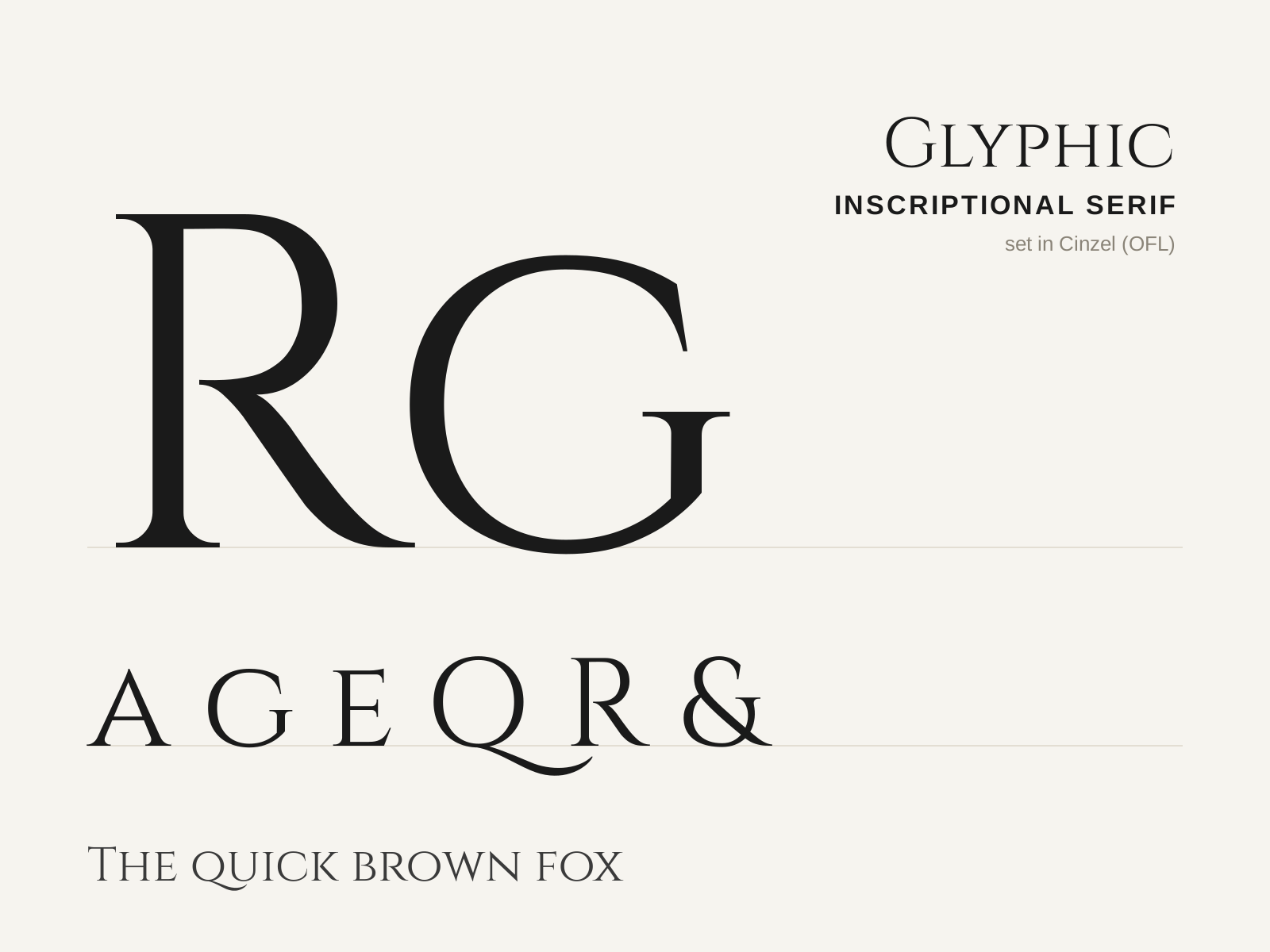
Original specimen, not a historical artifactType specimen — Glyphic (Inscriptional) Serif (Inscriptional serif); set in Cinzel (OFL). Owned; source: Design Style Book (original specimen).
About the style
Glyphic — or incised — serifs descend not from the scribe's pen but from the mason's chisel, taking the carved Roman inscriptional capital (epitomized by the Trajan Column of 113 AD) as their model. The genre is defined by serifs that are small, triangular, and flaring rather than slab-like or pen-bracketed, often emerging as a gentle widening of the stroke ends; contrast is moderate, terminals taper to points, and many designs are capital-centric with classical Roman proportions and no true lowercase. The effect is lapidary, monumental, and formal — letters that feel cut into a surface. Revived and elaborated through the twentieth century by designers such as Hermann Zapf (Optima sits at its edge) and Carol Twombly (Trajan), the glyphic serif matters because it preserves the deepest root of Latin letterforms — the inscriptional capital that predates printing by a millennium and a half — and lends instant gravitas to film titles, monuments, and institutional identities.
Notable examples
- ▸Trajan's Column inscription (Rome, AD 113)
- ▸Carol Twombly — Trajan (Adobe, 1989)
- ▸Hermann Zapf — Optima (1958, at the genre's edge)
Anatomy of Glyphic (Inscriptional) Serif
The numbered markers call out the design elements that define this style. Hover or tap a marker to see its breakdown.
Original specimen, not a historical artifactType specimen — Glyphic (Inscriptional) Serif (Inscriptional serif); set in Cinzel (OFL). Owned; source: Design Style Book (original specimen).
The capital R shows the classical Roman model — a small bowl, a wide, gracefully curving leg, and minimal triangular serifs that flare from the stroke as if cut in stone.
Many glyphic faces are capital-only, so a lowercase g may be absent; where present it is a restrained two-storey form with incised, tapering finishes.
Glyphic designs frequently omit a conventional lowercase a in favor of small capitals; any lowercase carries the same flared, chiselled terminals.
Set as titling, the flaring serifs and wide caps read as carved and dignified — used for gravitas rather than long passages of running text.
How Glyphic (Inscriptional) Serif connects
Styles form a network, not a tree. Explore the direct neighbours below — click any to travel the map one hop at a time.
- Influenced by
- Evolved from
Hover or tap a style to preview it.
Influenced by Humanist (Venetian) Serif — the chiselled Roman inscriptional capital behind both
Trajan evolved from Glyphic (Inscriptional) Serif — the archetypal inscriptional Roman capital
Optima influenced by Glyphic (Inscriptional) Serif — its flared, tapering stems derive from chiselled inscriptional letters
Albertus evolved from Glyphic (Inscriptional) Serif — letters modelled on chiselled and cast inscriptions
Describe it like this
Prompt-ready vocabulary for describing or re-creating the Glyphic (Inscriptional) Serif look. Tap a word to collect it in Designdeas.
Get copy-ready Glyphic (Inscriptional) Serif AI prompts →