1460s–1490s · Italy, Venice
Humanist (Venetian) Serif
Also known as Venetian serif, Humanist old-style
The earliest roman printing types, cut in Renaissance Italy to imitate the humanist scribal hand. Warm, sturdy, and unmistakably pen-formed, with a strongly slanted stress and a sloping crossbar on the lowercase e.
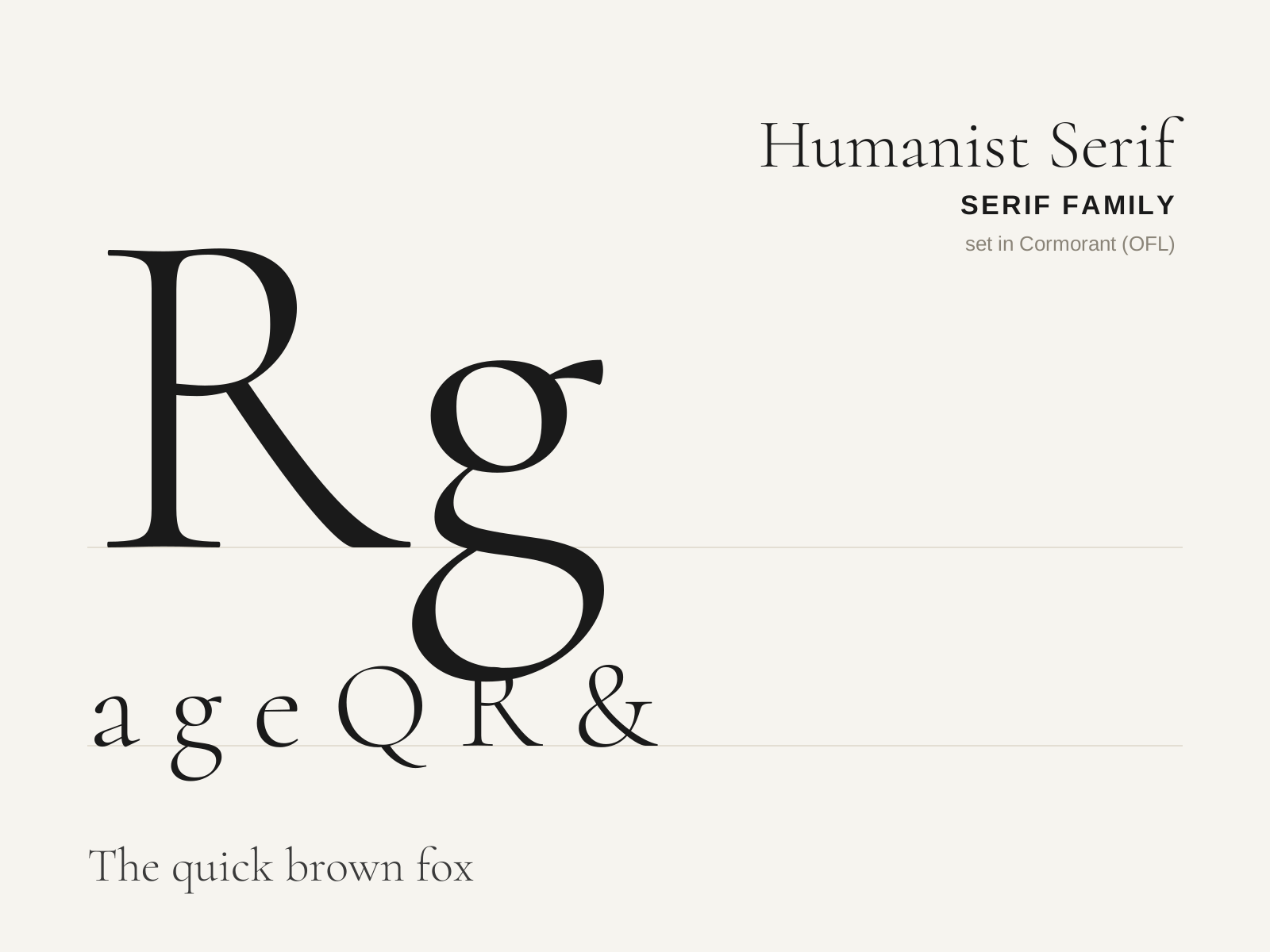
Original specimen, not a historical artifactType specimen — Humanist (Venetian) Serif (Serif family); set in Cormorant (OFL). Owned; source: Design Style Book (original specimen).
Across disciplines
- Graphic Design: Arts & Crafts Book Design
About the style
Humanist serifs are the first generation of roman printing types, cut in Italy between the 1460s and 1490s by punchcutters such as Nicolas Jenson to mechanize the rounded humanist minuscule that Renaissance scholars had revived from Carolingian models. They are defined by their close fidelity to the broad-nib pen: a steeply inclined axis of contrast, only modest thick-thin variation, heavily bracketed and often blunt, asymmetric serifs, and the diagnostic sloping bar on the lowercase 'e'. Compared with the later Garaldes they look darker, more vigorous, and slightly irregular, their color heavy on the page. They matter because they fixed the basic anatomy of the roman lowercase that every subsequent serif would refine, and because their robust, legible texture made them the model for twentieth-century revivals like Centaur and the entire 'humanist' branch of later sans-serifs.
Notable examples
- ▸Nicolas Jenson — Eusebius, De Evangelica Praeparatione (Venice, 1470)
- ▸Bruce Rogers — Centaur (1914, a Jenson revival)
- ▸Erhard Ratdolt — Venetian decorated editions (1480s)
Anatomy of Humanist (Venetian) Serif
The numbered markers call out the design elements that define this style. Hover or tap a marker to see its breakdown.
Original specimen, not a historical artifactType specimen — Humanist (Venetian) Serif (Serif family); set in Cormorant (OFL). Owned; source: Design Style Book (original specimen).
The capital R sits on heavily bracketed slab-like serifs with an outward-curving leg, its weight even and pen-formed rather than sharply modeled.
The lowercase g is two-storey with a broad upper bowl, a generous lower loop, and a small ear, drawn as the scribe's hand would join them.
The lowercase a is two-storey with a comfortably open aperture, its bowl tilted slightly to follow the inclined humanist axis.
In running text the modest contrast and heavy strokes give a dark, vigorous, slightly irregular color — robust and highly legible at book sizes.
How Humanist (Venetian) Serif connects
Styles form a network, not a tree. Explore the direct neighbours below — click any to travel the map one hop at a time.
- Parallel / cross-current
- Evolved from
- Influenced by
Hover or tap a style to preview it.
Parallel / cross-current Arts & Crafts Book Design — Morris's Kelmscott revival reached back to humanist and incunabula letterforms
Garalde (Old-style) evolved from Humanist (Venetian) Serif — the calmer, more even refinement of the first humanist romans
Glyphic (Inscriptional) Serif influenced by Humanist (Venetian) Serif — the chiselled Roman inscriptional capital behind both
Humanist Sans-serif influenced by Humanist (Venetian) Serif — reinfused the sans with classical Roman proportions and pen-rhythm
Jenson evolved from Humanist (Venetian) Serif — the archetypal Venetian humanist roman
Bembo evolved from Humanist (Venetian) Serif
Trajan influenced by Humanist (Venetian) Serif
Palatino influenced by Humanist (Venetian) Serif — rooted in Italian Renaissance letterforms
Describe it like this
Prompt-ready vocabulary for describing or re-creating the Humanist (Venetian) Serif look. Tap a word to collect it in Designdeas.
Get copy-ready Humanist (Venetian) Serif AI prompts →