Anime vs Japanese Postwar Graphic
Anime is the cross-discipline counterpart of Japanese Postwar Graphic — shares the bold postwar Japanese manga visual language.

Anime
The distinctive Japanese animation tradition marked by large expressive eyes, limited but dynamic motion, dramatic speed lines and held cinematic poses, and bold cel-shaded color.
- Large, glistening expressive eyes and stylized simplified faces
- Flat cel-shaded color with hard-edged highlights and shadow
- Limited animation punctuated by bursts of fluid dynamic motion
- Graphic effects—speed lines, impact frames, dramatic lighting flares
- Cinematic staging with detailed backgrounds and dynamic perspective
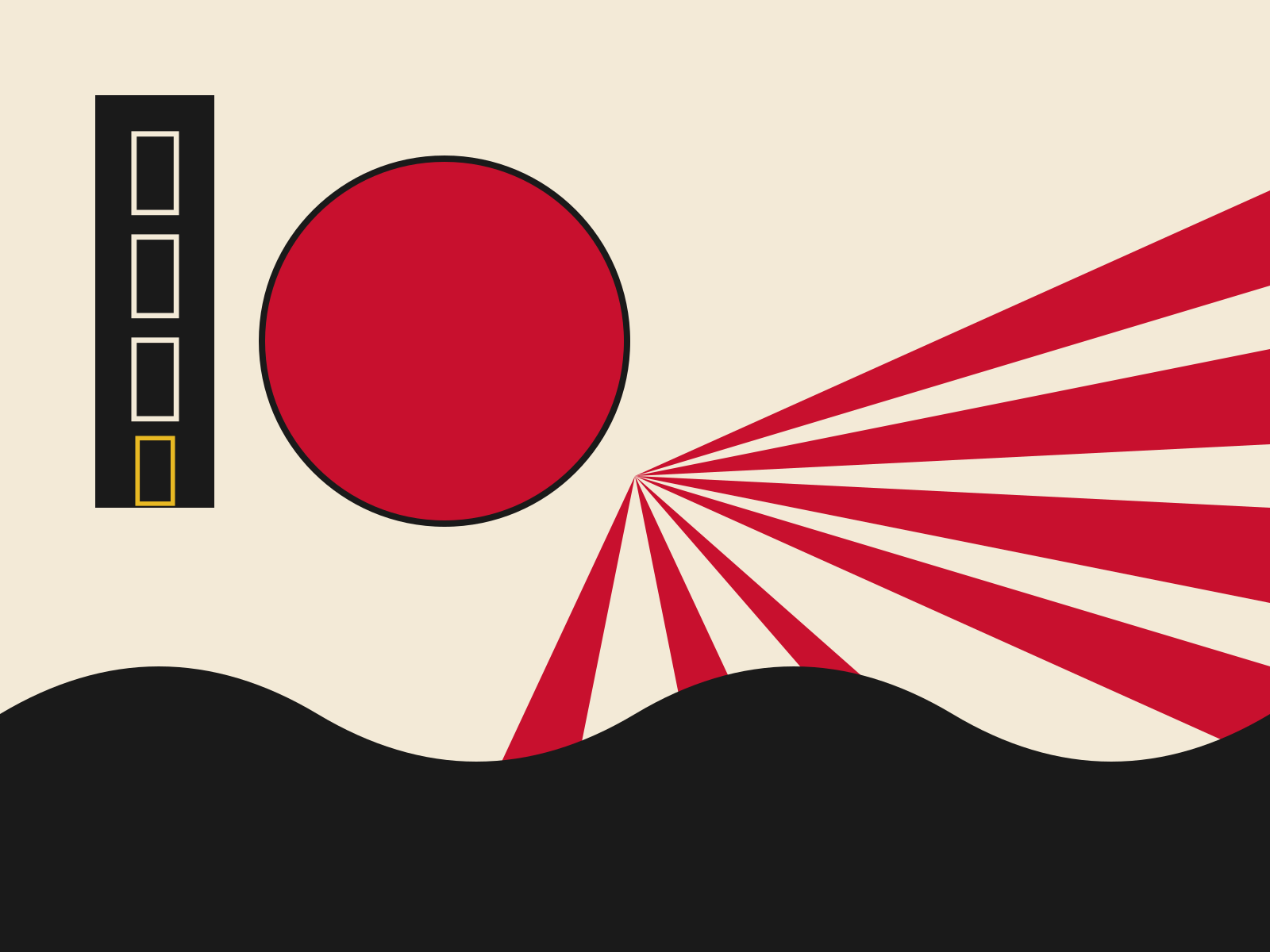
Japanese Postwar Graphic
The postwar generation of Japanese designers who fused Bauhaus rationalism with native tradition and Pop exuberance. From Kamekura's geometric clarity to Yokoo's psychedelic collage, it forged a distinctly Japanese modernism.
- Geometric clarity fused with Japanese motifs
- Flat planes and stylized faces from ukiyo-e and Noh
- Bold, saturated, often symbolic color
- Psychedelic collage and vernacular imagery (Yokoo)
- Disciplined modernist grid and typography
At a glance
| Anime | Japanese Postwar Graphic | |
|---|---|---|
| Era | 1963–present | 1950s–1980s |
| Discipline | Cinematography | Graphic Design |
| Region | Japan, Worldwide | Japan |
| Family | Animation, Japanese | World, Poster |
| Formal traits | cel-shaded, large-eyes, speed-lines, limited-animation | flat-color, geometric, collage, modernist |
More comparisons
Advertisement