Japanese Postwar Graphic vs Ukiyo-e Graphic
Japanese Postwar Graphic evolved from Ukiyo-e Graphic — fused the flat woodblock heritage with Western modernism.
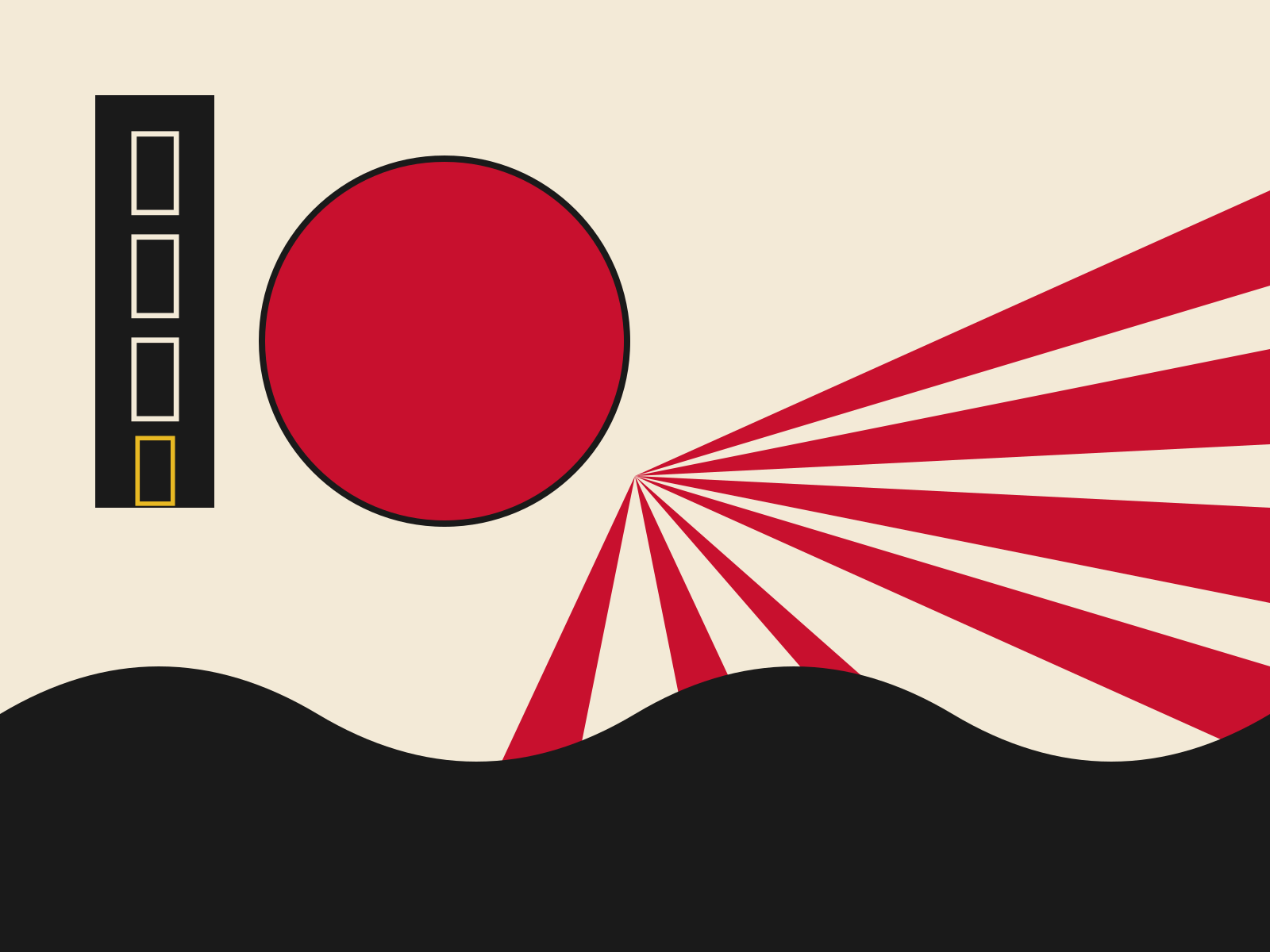
Japanese Postwar Graphic
The postwar generation of Japanese designers who fused Bauhaus rationalism with native tradition and Pop exuberance. From Kamekura's geometric clarity to Yokoo's psychedelic collage, it forged a distinctly Japanese modernism.
- Geometric clarity fused with Japanese motifs
- Flat planes and stylized faces from ukiyo-e and Noh
- Bold, saturated, often symbolic color
- Psychedelic collage and vernacular imagery (Yokoo)
- Disciplined modernist grid and typography

Ukiyo-e Graphic
Japanese woodblock prints of the 'floating world,' built from flat planes of color, confident black outlines, and daringly asymmetric, cropped compositions. A mass-produced popular art whose graphic logic reshaped Western design.
- Flat, unmodulated planes of color
- Strong black keyblock contour lines
- Asymmetric, boldly cropped compositions
- Flattened space with little Western perspective
- Layered multi-block (nishiki-e) color registration
At a glance
| Japanese Postwar Graphic | Ukiyo-e Graphic | |
|---|---|---|
| Era | 1950s–1980s | 17th–19th century |
| Discipline | Graphic Design | Graphic Design |
| Region | Japan | Japan |
| Family | World, Poster | World, Print |
| Formal traits | flat-color, geometric, collage, modernist | woodcut, flat-color, bold-outline, asymmetric |
More comparisons
Advertisement