1950s–1980s · Japan
Japanese Postwar Graphic
Also known as Postwar Japanese Design, Showa-era Graphic Design
The postwar generation of Japanese designers who fused Bauhaus rationalism with native tradition and Pop exuberance. From Kamekura's geometric clarity to Yokoo's psychedelic collage, it forged a distinctly Japanese modernism.
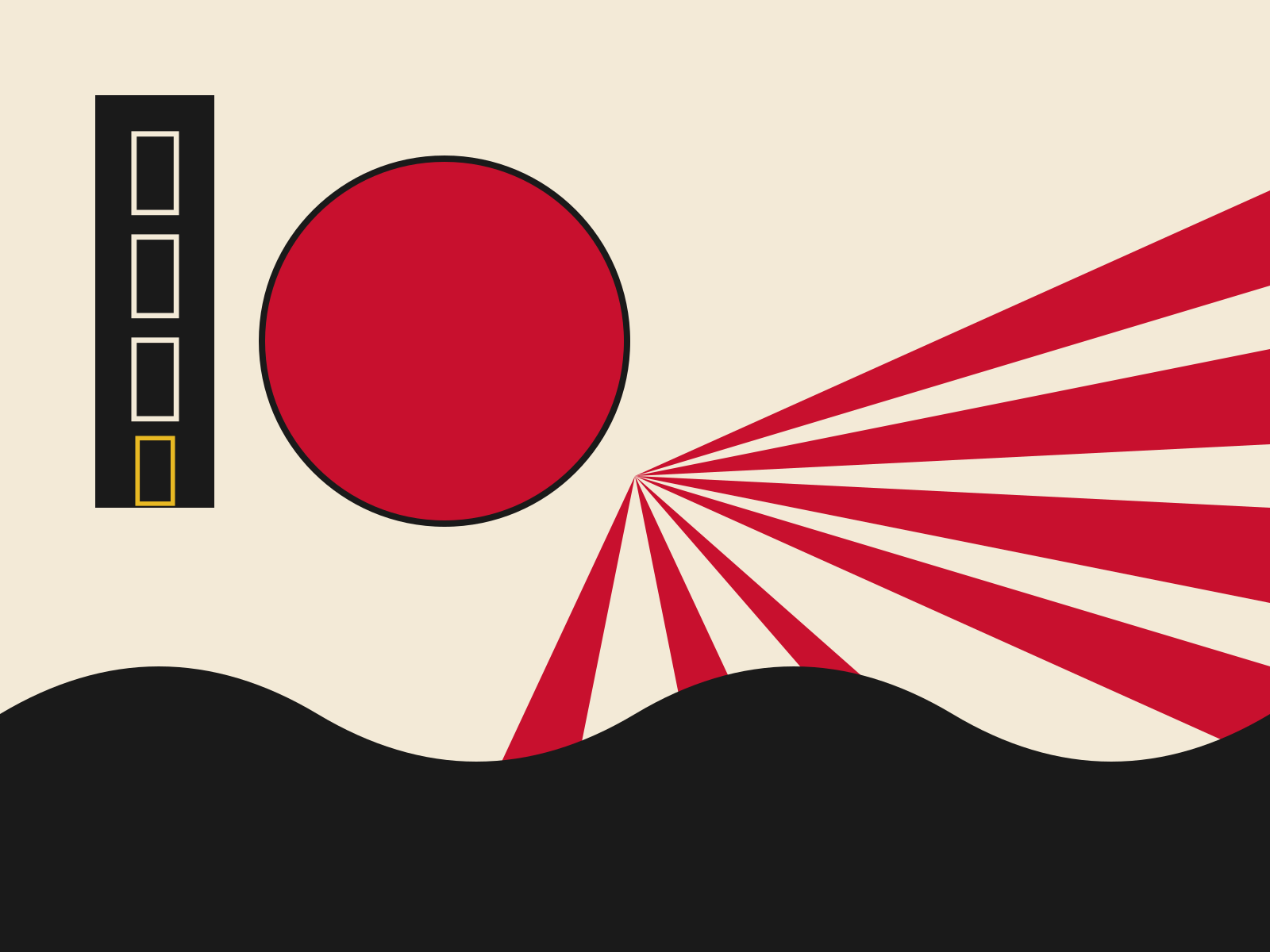
Original specimen, not a historical artifactOriginal specimen in the Japanese Postwar Graphic style. Owned; source: Design Style Book (original).
Across disciplines
- Cinematography: Anime
About the style
Japanese postwar graphic design arose during the rapid reconstruction and economic boom following 1945, as a new generation absorbed European modernism and the International Typographic Style while reinterpreting them through Japanese aesthetic sensibilities. Yusaku Kamekura, designer of the 1964 Tokyo Olympics identity, exemplified a rigorous geometric clarity rooted in the rising-sun symbol and tight Swiss discipline. Ikko Tanaka wove the flat planes and stylized faces of traditional Noh and ukiyo-e into crisp modern compositions, while Tadanori Yokoo broke the other way into riotous, psychedelic, vernacular collage that anticipated postmodernism. United by ambition and craft, these designers established Japan as a global graphic-design power, balancing minimalist restraint with bold color and a deep dialogue between tradition and modernity. The movement matters as one of the 20th century's most influential national design cultures.
Notable examples
- ▸Yusaku Kamekura — Tokyo 1964 Olympic Games poster and identity (1961–1964)
- ▸Tadanori Yokoo — self-portrait poster 'Having Reached a Climax...' (1965)
- ▸Ikko Tanaka — Nihon Buyo poster (1981)
Anatomy of Japanese Postwar Graphic
The numbered markers call out the design elements that define this style. Hover or tap a marker to see its breakdown.
Original specimen, not a historical artifactOriginal specimen in the Japanese Postwar Graphic style. Owned; source: Design Style Book (original).
Kamekura distills the Olympic identity into a single perfect red disc and gold rings, modernist reduction rooted in the national flag.
Ikko Tanaka builds a face from flat geometric color blocks, abstracting a traditional theatrical mask into pure graphic form.
Yokoo stacks vintage photographs, sunbursts, and lurid color into dense, vernacular collage that overturns Swiss restraint.
Flat fields of intense red, gold, and black carry emblematic weight, far bolder than the muted European modernist palette.
How Japanese Postwar Graphic connects
Styles form a network, not a tree. Explore the direct neighbours below — click any to travel the map one hop at a time.
- Evolved from
- Influenced by
- Parallel / cross-current
Hover or tap a style to preview it.
Evolved from Ukiyo-e Graphic — fused the flat woodblock heritage with Western modernism
Influenced by Swiss Style
Influenced by Psychedelic Poster Art
Anime parallel / cross-current Japanese Postwar Graphic — shares the bold postwar Japanese manga visual language
Describe it like this
Prompt-ready vocabulary for describing or re-creating the Japanese Postwar Graphic look. Tap a word to collect it in Designdeas.
Get copy-ready Japanese Postwar Graphic AI prompts →