1905–1920s · Germany
Plakatstil
Also known as Sachplakat, Object Poster
A radically reductive German poster style that strips the advertisement to a single product, a brand name, and a flat field of color — the 'object poster' that founded modern advertising design.
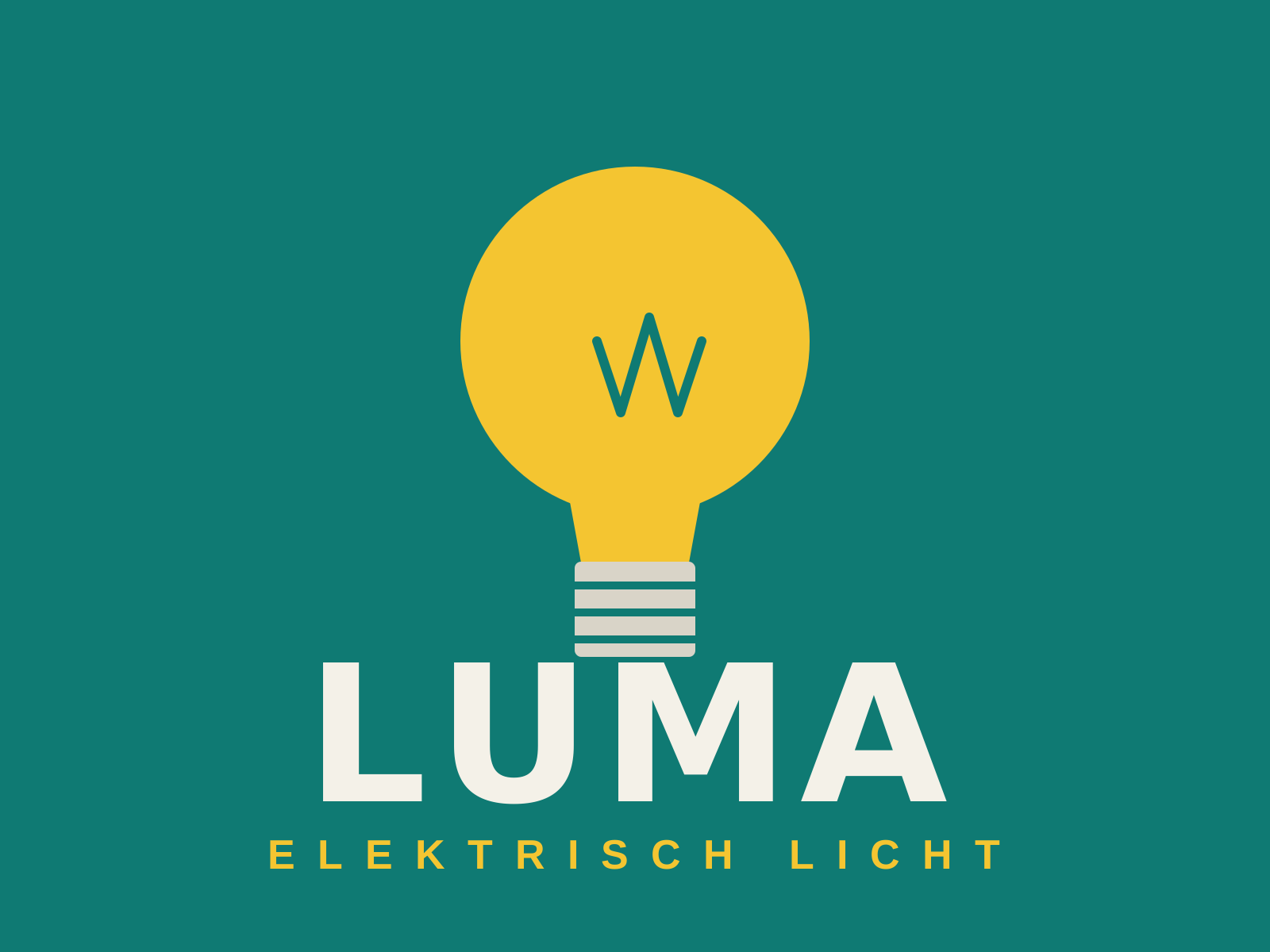
Original specimen, not a historical artifactOriginal specimen in the Plakatstil 'object poster' style. Owned; source: Design Style Book (original).
About the style
Plakatstil, or the Sachplakat ('object poster'), emerged in Berlin around 1905 as a deliberate reaction against the ornamental excess of Art Nouveau and Victorian advertising. Its founding gesture is credited to the young Lucian Bernhard, whose 1906 poster for Priester matches showed only two matchsticks and the brand name against a flat ground — nothing else. The style reduced the poster to its essential message: a bold, simplified depiction of the product, the company name in strong custom lettering, and broad areas of flat, saturated color with no illusionistic depth. This economy made posters legible at a glance from a moving tram or busy street, aligning design with the new science of advertising and brand recognition. Carried forward by Ludwig Hohlwein's tonal, planar figures, Plakatstil established reduction, flat color, and the integrated logotype as foundations of twentieth-century graphic design.
Notable examples
- ▸Lucian Bernhard — Priester matches poster (1906)
- ▸Lucian Bernhard — Stiller shoes poster (c. 1908)
- ▸Ludwig Hohlwein — Hermann Scherrer / PKZ menswear posters (c. 1908–1911)
Anatomy of Plakatstil
The numbered markers call out the design elements that define this style. Hover or tap a marker to see its breakdown.
Original specimen, not a historical artifactOriginal specimen in the Plakatstil 'object poster' style. Owned; source: Design Style Book (original).
One object floats alone as the entire subject, every nonessential detail removed so the product reads instantly.
The company name appears in strong, custom-drawn lettering, treated as a graphic element equal to the product itself.
The background is a single unmodulated plane of saturated color, giving maximum punch and no illusion of space.
Borders, scenery, and scrollwork are eliminated entirely — a sharp break from the cluttered posters that came before.
How Plakatstil connects
Styles form a network, not a tree. Explore the direct neighbours below — click any to travel the map one hop at a time.
- Reaction against
- Influenced by
Hover or tap a style to preview it.
Reaction against Art Nouveau (Graphic) — stripped away Art Nouveau's ornament and line to the bare product and name
Influenced by Vienna Secession Graphics — shared the move toward flat planes, geometry, and the integrated logotype
Mid-Century Modern Graphic Design influenced by Plakatstil — inherited the reductive object-poster logic and the integrated logotype
War Propaganda Poster influenced by Plakatstil — the reductive single-image object poster
Mid-Century Travel Poster influenced by Plakatstil
Describe it like this
Prompt-ready vocabulary for describing or re-creating the Plakatstil look. Tap a word to collect it in Designdeas.
Get copy-ready Plakatstil AI prompts →