1896 · Germany
Akzidenz-Grotesk
Also known as Standard, AG
Berthold's 1896 grotesque — the sober German jobbing sans that, half a century later, became the favored typeface of Swiss modernism and the direct ancestor of Helvetica and Univers.
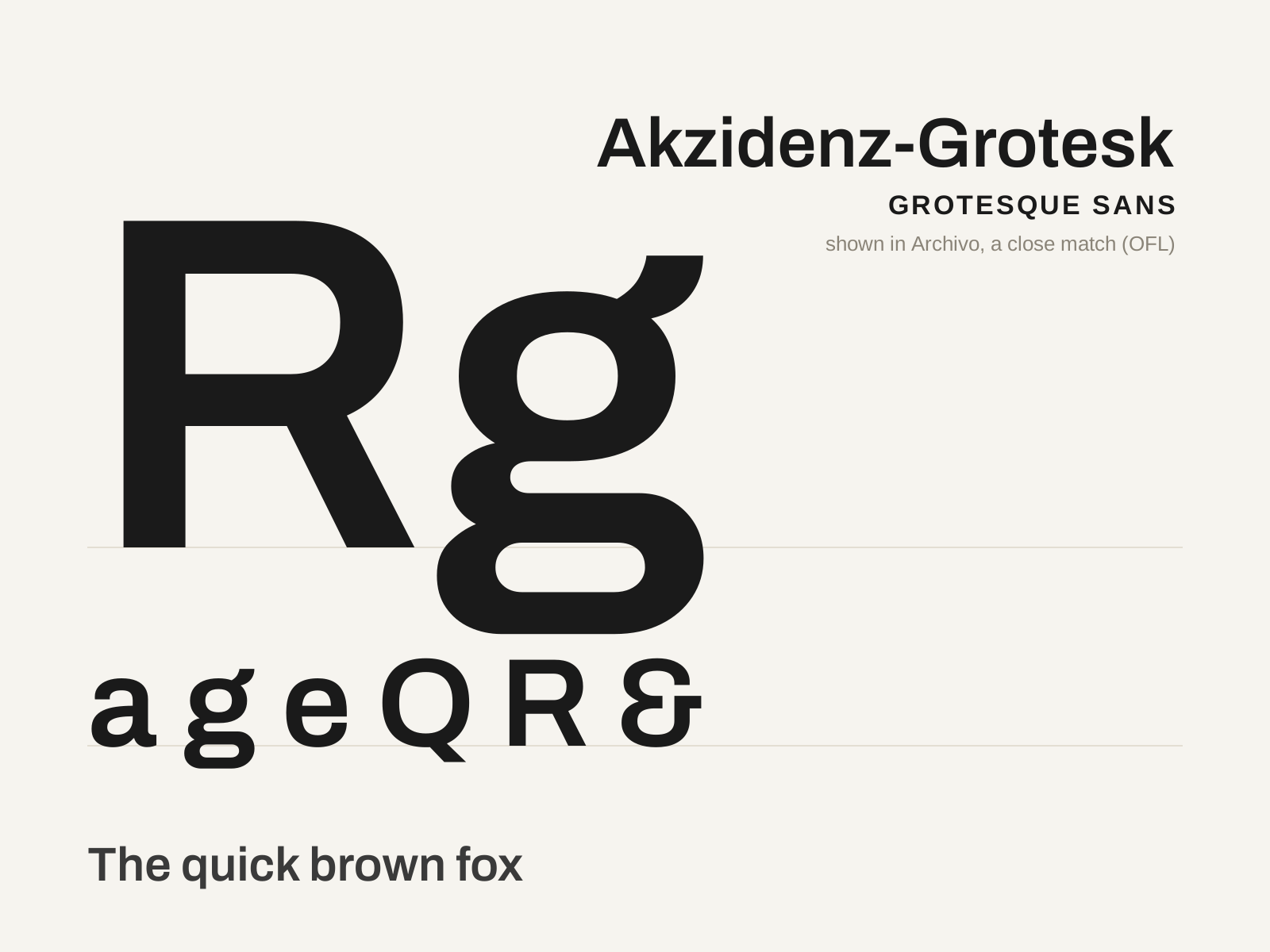
Original specimen, not a historical artifactType specimen — Akzidenz-Grotesk (Grotesque sans); shown in Archivo, a close match (OFL). Owned; source: Design Style Book (original specimen).
About the style
Akzidenz-Grotesk, released by the Berlin foundry H. Berthold in 1896 (its name means 'jobbing grotesque'), is the pivotal late-nineteenth-century sans that bridges the Victorian grotesque and the postwar neo-grotesque. Restrained and even-colored where many grotesques were quirky, it carried a comparatively low contrast, a moderate x-height, slightly squared curves, and a workmanlike neutrality that proved astonishingly durable. In the 1950s it was rediscovered by Swiss designers — Josef Müller-Brockmann and the Ulm school built the International Typographic Style around it — and it became the immediate model against which Helvetica (1957) was conceived. Compared with its descendants its x-height is lower and its spacing looser, lending it a slightly more open, less mechanical voice. It is, in effect, the missing link in the sans-serif lineage.
Notable examples
- ▸H. Berthold foundry — Akzidenz-Grotesk (1896)
- ▸Josef Müller-Brockmann — Swiss poster work (1950s–60s)
- ▸Ulm School of Design / International Typographic Style
Anatomy of Akzidenz-Grotesk
The numbered markers call out the design elements that define this style. Hover or tap a marker to see its breakdown.
Original specimen, not a historical artifactType specimen — Akzidenz-Grotesk (Grotesque sans); shown in Archivo, a close match (OFL). Owned; source: Design Style Book (original specimen).
Akzidenz-Grotesk's R ends in a curved leg that tucks back under the bowl — the very feature Helvetica would inherit and refine.
It uses a double-story g with a closed lower loop, the dense grotesque construction that lends the face its even color.
The double-story a has a fairly closed aperture and a squared bowl, more sober and less open than a humanist a.
Set as text it reads as an even, sober grey — looser and a touch warmer than Helvetica, which is why mid-century Swiss designers prized it.
How Akzidenz-Grotesk connects
Styles form a network, not a tree. Explore the direct neighbours below — click any to travel the map one hop at a time.
- Evolved from
- Influenced by
Hover or tap a style to preview it.
Evolved from Grotesque Sans-serif — the sober German grotesque that bridged to the neo-grotesque
Franklin Gothic influenced by Akzidenz-Grotesk
Helvetica evolved from Akzidenz-Grotesk — drawn to perfect the Berthold grotesque
Univers evolved from Akzidenz-Grotesk — Frutiger's systematic neo-grotesque, Helvetica's 1957 rival
Describe it like this
Prompt-ready vocabulary for describing or re-creating the Akzidenz-Grotesk look. Tap a word to collect it in Designdeas.
Get copy-ready Akzidenz-Grotesk AI prompts →