1950s–1960s · Switzerland, Germany, France
Neo-grotesque Sans-serif
Also known as Realist sans, Transitional sans
The mid-century rationalization of the grotesque — the neutral, even, tightly fitted sans of Swiss modernism, engineered to disappear so the message could speak. Helvetica and Univers are its archetypes.
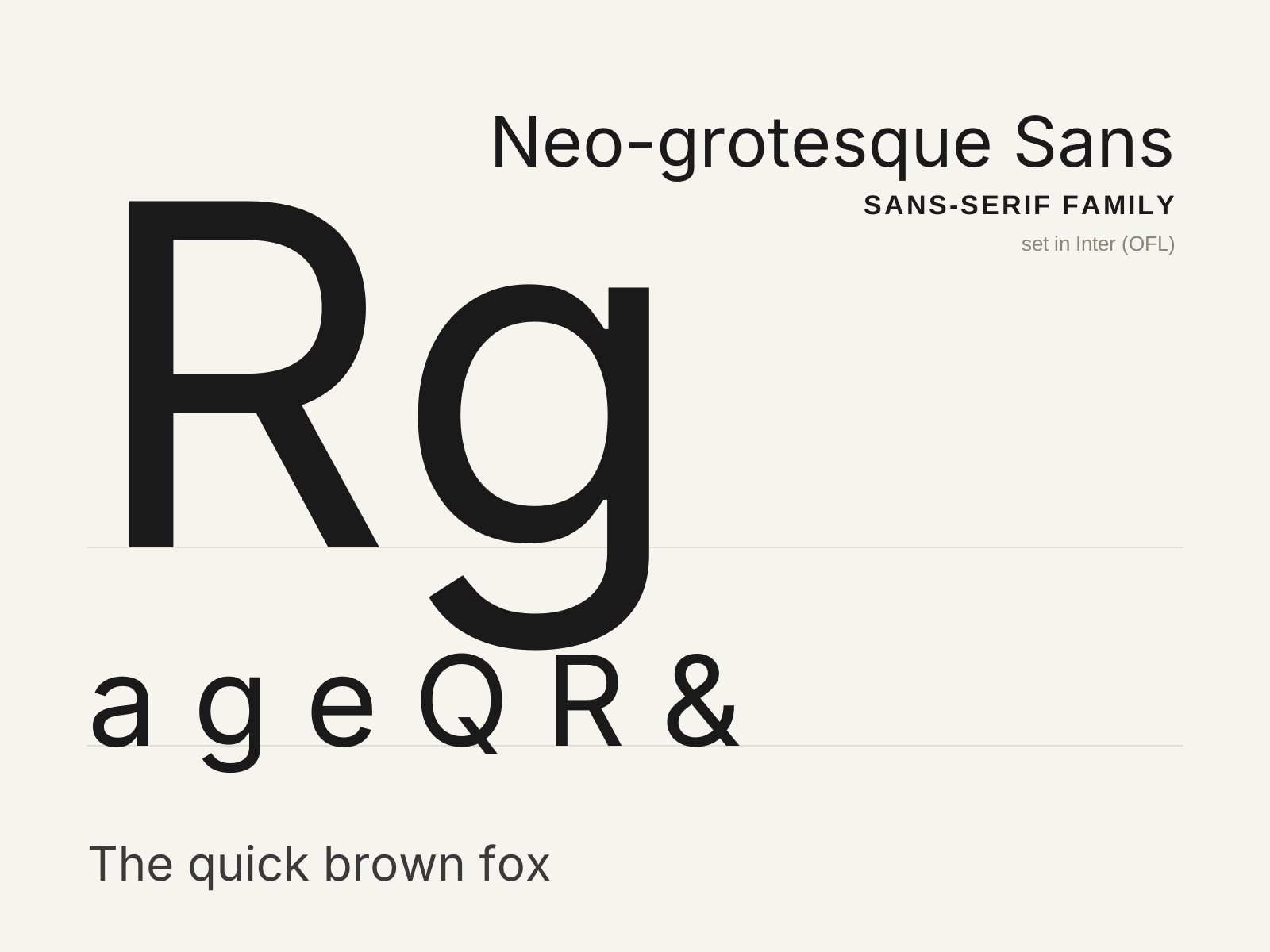
Original specimen, not a historical artifactType specimen — Neo-grotesque Sans-serif (Sans-serif family); set in Inter (OFL). Owned; source: Design Style Book (original specimen).
About the style
The neo-grotesque refined the nineteenth-century grotesque into something cooler, more systematic, and studiously neutral, arriving with the Swiss/International Typographic Style of the 1950s. Where the old grotesques were a little irregular, the neo-grotesque pursues even, near-monoline strokes, a high x-height, tight spacing, and stroke terminals sheared on strict horizontals and verticals. Aperture is closed and the overall voice is deliberately impersonal, suppressing any authorial expression in favor of clarity and uniformity. Adrian Frutiger's Univers (1957) imposed a rational numbered weight matrix on the genre, while Helvetica became its ubiquitous corporate emblem. The neo-grotesque is the typographic sound of postwar corporate modernism — admired for its discipline, indicted by some for its blandness.
Notable examples
- ▸Max Miedinger & Eduard Hoffmann — Helvetica (1957)
- ▸Adrian Frutiger — Univers (1957)
- ▸Massimo Vignelli — Helvetica-driven corporate identities
Anatomy of Neo-grotesque Sans-serif
The numbered markers call out the design elements that define this style. Hover or tap a marker to see its breakdown.
Original specimen, not a historical artifactType specimen — Neo-grotesque Sans-serif (Sans-serif family); set in Inter (OFL). Owned; source: Design Style Book (original specimen).
The neo-grotesque R most often ends in a curved leg that tucks back toward the stem (Helvetica) — though Univers prefers a straighter, slightly splayed leg.
The genre keeps the double-story g, its lower loop drawn as a neat closed or near-closed bowl that reinforces the even, controlled texture.
A double-story a with a relatively closed aperture; the bowl is gently squared, contributing to the uniform, machined feel of the page.
Set as text the neo-grotesque reads as an even, almost anonymous grey — the prized neutrality that made it the default voice of corporate and institutional design.
How Neo-grotesque Sans-serif connects
Styles form a network, not a tree. Explore the direct neighbours below — click any to travel the map one hop at a time.
- Evolved from
Hover or tap a style to preview it.
Evolved from Grotesque Sans-serif — the mid-century rationalization of the Victorian grotesque
Roboto evolved from Neo-grotesque Sans-serif — a screen-tuned neo-grotesque with humanist touches
Describe it like this
Prompt-ready vocabulary for describing or re-creating the Neo-grotesque Sans-serif look. Tap a word to collect it in Designdeas.
Get copy-ready Neo-grotesque Sans-serif AI prompts →