2011 · United States
Roboto
Also known as Android system font
Christian Robertson's 2011 typeface for Google's Android — a neo-grotesque skeleton loosened with humanist touches, engineered for screens and dubbed at launch a 'frankenfont' for its hybrid DNA.
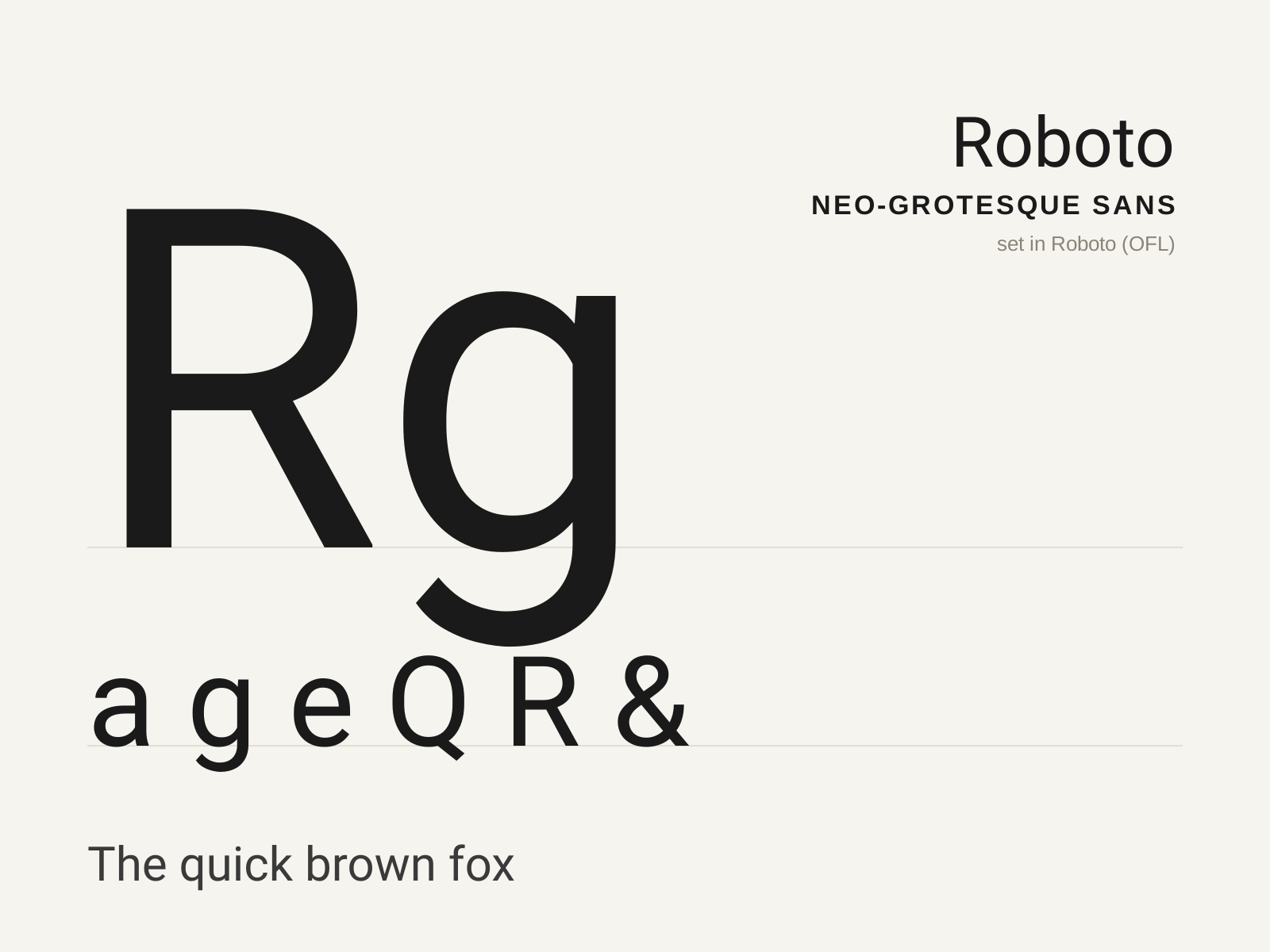
Original specimen, not a historical artifactType specimen — Roboto (Neo-grotesque sans); set in Roboto (OFL). Owned; source: Design Style Book (original specimen).
Across disciplines
- Graphic Design: Material Design
About the style
Roboto was designed by Christian Robertson and released by Google in 2011 as the system typeface of Android (Ice Cream Sandwich), built specifically for rendering across the vast range of mobile screens. It is a deliberate hybrid: a largely neo-grotesque structure — even strokes, high x-height, mechanical skeleton — relaxed by humanist gestures such as open apertures, slightly varied widths, and friendlier curves, so that it reads with mechanical efficiency yet keeps an approachable warmth. Critics on release nicknamed it a 'frankenfont' for visibly stitching geometric, grotesque, and humanist details together, but its tight, legible fit at small sizes made it one of the most-rendered typefaces in the world via billions of Android devices. Subsequent versions and the variable Roboto Flex refined the design, cementing it as a defining face of the smartphone era.
Notable examples
- ▸Christian Robertson — Roboto (Google, 2011)
- ▸Android system typeface (Ice Cream Sandwich onward)
- ▸Google Material Design / Roboto Flex variable family
Anatomy of Roboto
The numbered markers call out the design elements that define this style. Hover or tap a marker to see its breakdown.
Original specimen, not a historical artifactType specimen — Roboto (Neo-grotesque sans); set in Roboto (OFL). Owned; source: Design Style Book (original specimen).
Roboto's R uses a mostly straight leg with a slight taper — a neo-grotesque tell, lent a touch of humanist softness at the junction.
It uses a compact double-story g, part of the grotesque side of its hybrid character rather than a geometric single-story form.
The double-story a opens its aperture more than a strict neo-grotesque would — one of the humanist concessions that keep it legible on small screens.
In running text Roboto reads tight, even, and highly legible at small sizes — the engineered screen voice rendered on billions of Android devices.
How Roboto connects
Styles form a network, not a tree. Explore the direct neighbours below — click any to travel the map one hop at a time.
- Evolved from
- Influenced by
- Parallel / cross-current
Hover or tap a style to preview it.
Evolved from Neo-grotesque Sans-serif — a screen-tuned neo-grotesque with humanist touches
Influenced by Helvetica
Parallel / cross-current Material Design — the system face of Google Material Design
Compare side by side
Describe it like this
Prompt-ready vocabulary for describing or re-creating the Roboto look. Tap a word to collect it in Designdeas.
Get copy-ready Roboto AI prompts →