1932 · England, London
Times New Roman
Also known as Times, Times Roman
The 1932 newspaper face commissioned for The Times of London under Stanley Morison and drawn by Victor Lardent — a compact, sharp, economical transitional serif that became the twentieth century's default.
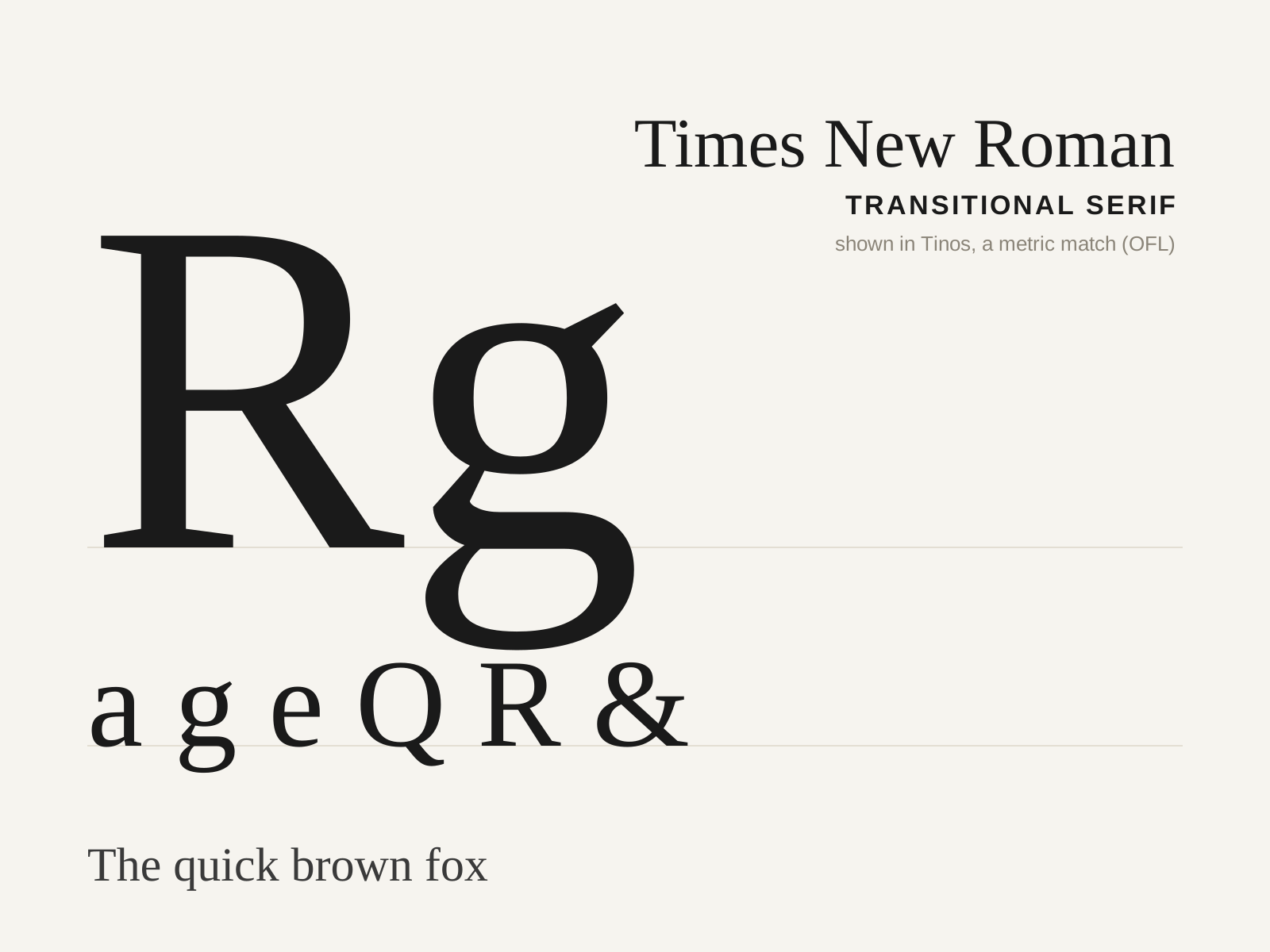
Original specimen, not a historical artifactType specimen — Times New Roman (Transitional serif); shown in Tinos, a metric match (OFL). Owned; source: Design Style Book (original specimen).
About the style
Times New Roman was developed for The Times of London in 1931–32 after Stanley Morison criticized the paper's typography; Morison directed the design and the Times draughtsman Victor Lardent executed the drawings, with Monotype engineering the production. Conceived to be legible, economical, and space-saving on newsprint, it is a transitional-to-Dutch-influenced serif with relatively high contrast, sharply pointed bracketed serifs, a large x-height, and notably condensed proportions that pack more characters per line. Its sturdy sharpness reads cleanly at small sizes under fast printing. When it migrated to office software as a system default, it became one of the most ubiquitous text faces of the century — for better or worse the 'no decision' typeface of typewritten and word-processed documents. It matters both as a masterpiece of functional newspaper design and as the most widely set serif of the modern era.
Notable examples
- ▸Stanley Morison & Victor Lardent — The Times of London (3 October 1932)
- ▸Monotype Times New Roman / Linotype Times Roman releases
- ▸Microsoft Word default text face (late 20th century)
Anatomy of Times New Roman
The numbered markers call out the design elements that define this style. Hover or tap a marker to see its breakdown.
Original specimen, not a historical artifactType specimen — Times New Roman (Transitional serif); shown in Tinos, a metric match (OFL). Owned; source: Design Style Book (original specimen).
The capital R has a compact bowl and a straight, slightly curved leg on sharply pointed bracketed serifs, drawn tight for economical setting.
The lowercase g is two-storey with a small, neatly closed loop and a fine ear, kept compact to save horizontal space.
The lowercase a is two-storey with a moderate aperture and a generous x-height, helping legibility at small newsprint sizes.
Running text reads dense, even, and economical — high contrast and condensed widths fitting more words per line, the default of modern documents.
How Times New Roman connects
Styles form a network, not a tree. Explore the direct neighbours below — click any to travel the map one hop at a time.
- Evolved from
- Influenced by
Hover or tap a style to preview it.
Evolved from Transitional Serif
Influenced by Baskerville
Compare side by side
Describe it like this
Prompt-ready vocabulary for describing or re-creating the Times New Roman look. Tap a word to collect it in Designdeas.
Get copy-ready Times New Roman AI prompts →