1990s–present · Japan, Global
Wabi-Sabi Interior
Also known as Wabi-Sabi, Perfectly Imperfect, Imperfect Minimalism
An interior philosophy rooted in the Japanese aesthetic of finding beauty in imperfection, impermanence, and incompleteness. It favours weathered, handmade, natural materials and quiet, unforced rooms.
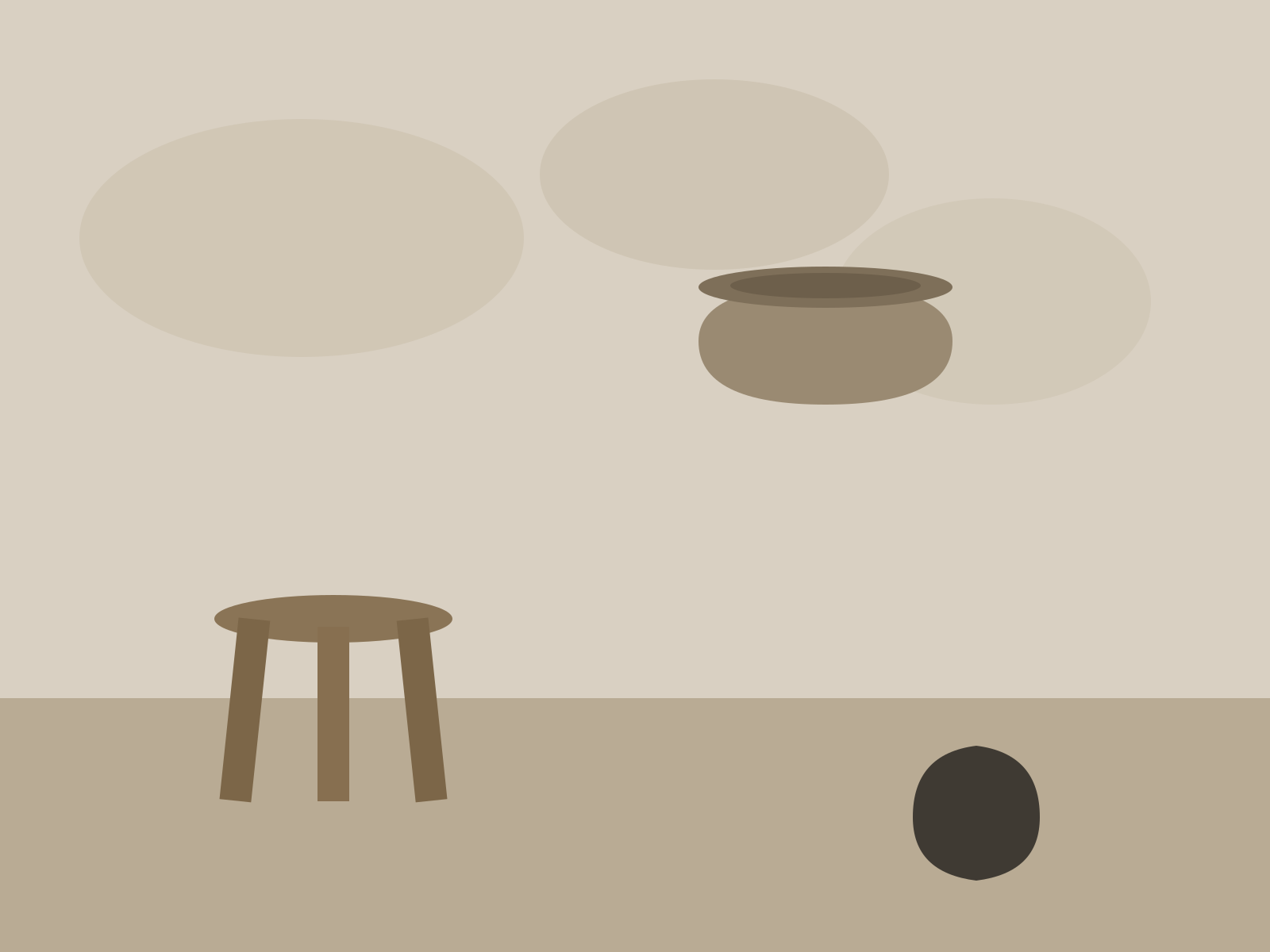
Original specimen, not a historical artifactOriginal specimen in the Wabi-Sabi Interior style. Owned; source: Design Style Book (original).
Across disciplines
- Architecture: Traditional Japanese Architecture
- Architecture: Sustainable Architecture
About the style
Wabi-sabi as an interior aesthetic draws on a centuries-old Japanese worldview — shaped by Zen Buddhism and the tea ceremony — that finds beauty in imperfection, transience, and humility. Leonard Koren's 1994 book popularised the concept in the West, and over the following decades it became a recognisable interior style emphasising the patina of age and the honesty of raw, natural materials. Rooms are pared back but never sterile: rough plaster and lime-washed walls, unfinished or weathered wood, hand-thrown ceramics, undyed linen, and stone are valued precisely for their irregularity, cracks, and signs of use. The palette is earthy and desaturated — clay, stone grey, ecru, charcoal, and muddy greens — and lighting is soft and low. Empty space, asymmetry, and a tolerance for wear give the interior a meditative, grounded calm. Wabi-sabi is a direct counter-current to glossy, mass-produced perfection.
Notable examples
- ▸Leonard Koren — 'Wabi-Sabi for Artists, Designers, Poets & Philosophers' (1994)
- ▸Axel Vervoordt's pared-back Belgian interiors
- ▸Japanese tea-room (chashitsu) aesthetics as a source tradition
Anatomy of Wabi-Sabi Interior
The numbered markers call out the design elements that define this style. Hover or tap a marker to see its breakdown.
Original specimen, not a historical artifactOriginal specimen in the Wabi-Sabi Interior style. Owned; source: Design Style Book (original).
Uneven, hand-troweled plaster with cloudy tonal variation is prized for its texture and imperfection.
Aged, knotted, or unfinished wood shows its grain and history rather than a flawless machined surface.
Irregular stoneware vessels, sometimes repaired in the kintsugi spirit, celebrate the maker's hand and the object's wear.
Deliberate emptiness and asymmetric arrangement give the eye room to rest and the space a meditative calm.
How Wabi-Sabi Interior connects
Styles form a network, not a tree. Explore the direct neighbours below — click any to travel the map one hop at a time.
- Influenced by
- Reaction against
- Parallel / cross-current
Hover or tap a style to preview it.
Influenced by Traditional Japanese Architecture — rooted in Zen, tea-ceremony, and Japanese vernacular aesthetics
Reaction against Contemporary Minimalist — counters glossy machined perfection with patina and wear
Parallel / cross-current Sustainable Architecture — values natural, low-impact, long-lived materials
Japandi influenced by Wabi-Sabi Interior — adopts the acceptance of imperfection and emptiness
Zen Interior parallel / cross-current Wabi-Sabi Interior — both draw on Japanese restraint and imperfection
Describe it like this
Prompt-ready vocabulary for describing or re-creating the Wabi-Sabi Interior look. Tap a word to collect it in Designdeas.
Get copy-ready Wabi-Sabi Interior AI prompts →