1955–present · United States, Global
Courier
Also known as Courier New, Courier Prime
The slab-serifed monospace designed for IBM typewriters in 1955, so ubiquitous it became the visual default of the typewritten page — and, by industry decree, of the screenplay. Every glyph marches at the same fixed width.
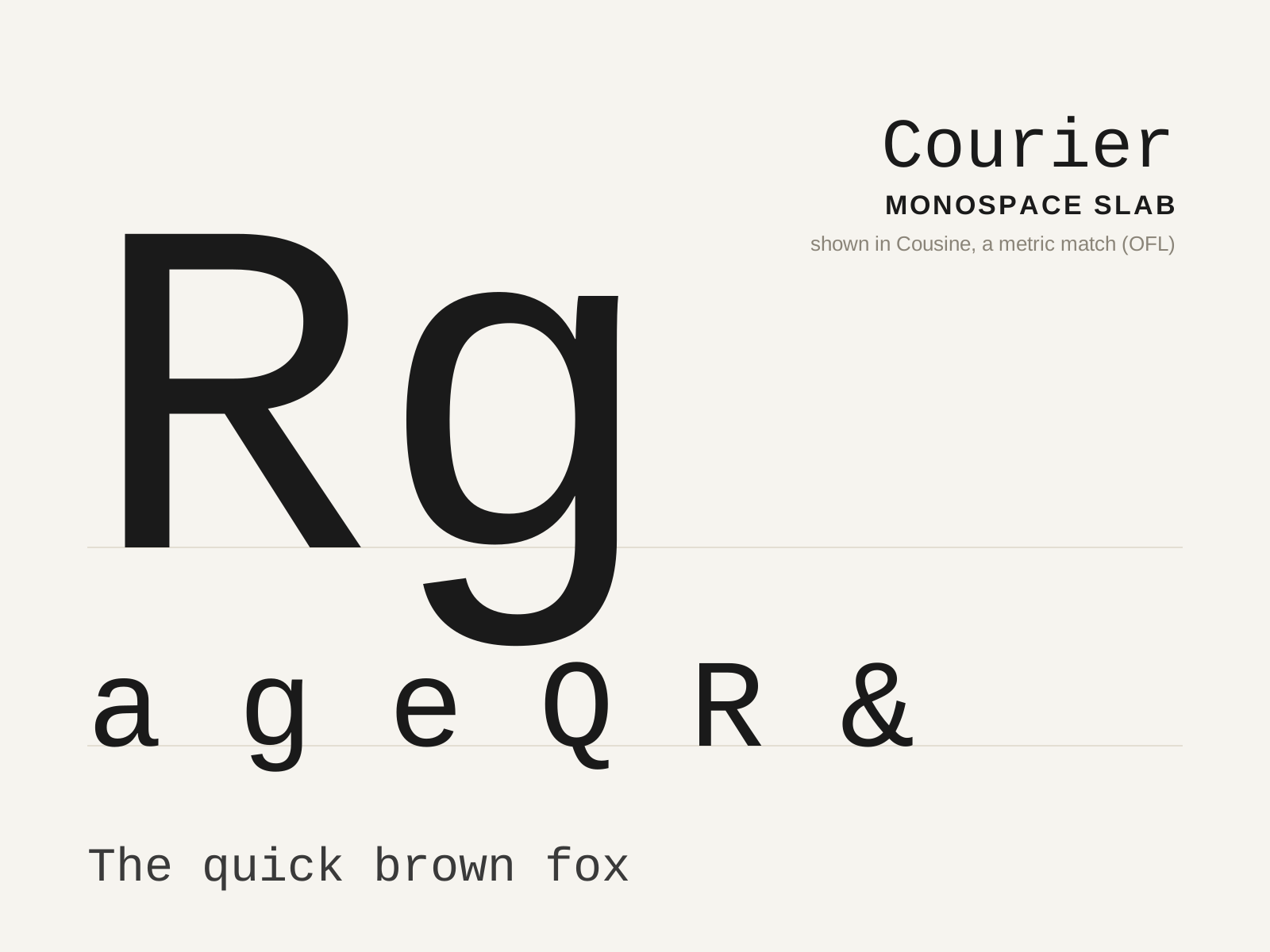
Original specimen, not a historical artifactType specimen — Courier (Monospace slab); shown in Cousine, a metric match (OFL). Owned; source: Design Style Book (original specimen).
About the style
Courier is the monospaced slab serif drawn by Howard 'Bud' Kettler for IBM around 1955, intended for the company's electric typewriters, which famously declined to trademark it, letting the design spread across the industry. Built on a fixed-width grid, Courier pads its narrow letters with broad slab serifs and wide spurs while keeping a low stroke contrast that survives the impact of a typewriter ribbon. Its open, sturdy forms and even spacing made it the archetypal typewritten look, and as digital systems adopted it — Courier New shipping with Windows — it became a near-universal default. By long-standing convention the screenplay industry standardized on 12-point Courier, where its fixed pitch makes one page of script reliably approximate one minute of screen time. Later revivals such as Courier Prime refined its on-screen weight and italics specifically for screenwriting software while preserving the original's familiar rhythm.
Notable examples
- ▸Courier (Howard Kettler, IBM, 1955)
- ▸Courier New (Monotype digital adaptation, 1990s)
- ▸Courier Prime (Quote-Unquote Apps, 2013)
Anatomy of Courier
The numbered markers call out the design elements that define this style. Hover or tap a marker to see its breakdown.
Original specimen, not a historical artifactType specimen — Courier (Monospace slab); shown in Cousine, a metric match (OFL). Owned; source: Design Style Book (original specimen).
Courier's capital R carries blunt slab serifs and a straight diagonal leg, sized to fill its fixed cell. Low contrast keeps the strokes even and durable.
The lowercase g is a clear double-story form widened with serifs and spacing to occupy the standard cell. Its open loops survive ribbon impact and screen rendering alike.
The lowercase a is a serifed double-story design padded to the fixed width, with a small spur foot. Open counters keep it legible in dense typescript.
Courier reads as official typescript and carbon copy; its fixed pitch underpins the 12-point screenplay standard where a page equals roughly a minute of screen time.
How Courier connects
Styles form a network, not a tree. Explore the direct neighbours below — click any to travel the map one hop at a time.
- Evolved from
- Influenced by
Hover or tap a style to preview it.
Evolved from Monospace — the archetypal typewriter monospace
Influenced by Slab Serif — a slab-serifed fixed-width design
Space Mono influenced by Courier
American Typewriter influenced by Courier — reimagines the typewriter look without fixed-width spacing
Compare side by side
Describe it like this
Prompt-ready vocabulary for describing or re-creating the Courier look. Tap a word to collect it in Designdeas.
Get copy-ready Courier AI prompts →