c. 1870–present · United States, Global
Monospace
Also known as Fixed-Width, Fixed-Pitch, Non-Proportional Type
The family in which every glyph occupies an identical horizontal width, descended from the mechanical typewriter and now the default voice of code. A narrow 'i' and a wide 'm' share the same cell, forcing distinctive design compromises.
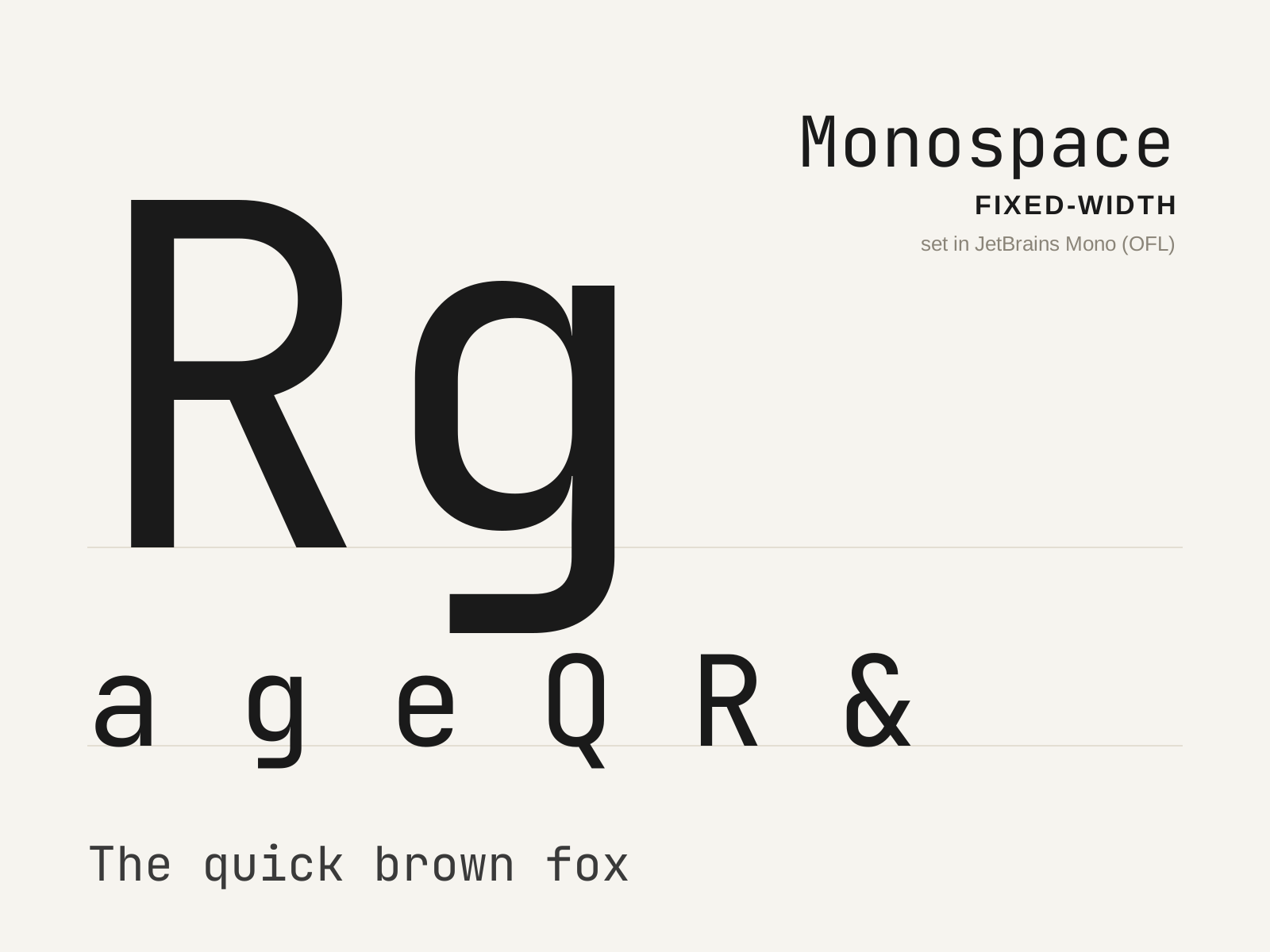
Original specimen, not a historical artifactType specimen — Monospace (Fixed-width); set in JetBrains Mono (OFL). Owned; source: Design Style Book (original specimen).
Across disciplines
- Graphic Design: Brutalist Web Design
About the style
Monospace, or fixed-width, is the typographic classification in which every character — from the slender 'i' to the broad 'm' — advances the same horizontal distance, originally a mechanical necessity of the typewriter's uniform escapement. To make naturally narrow letters fill their cell and wide letters fit within it, monospace designs add prominent slab serifs and wide spurs to thin glyphs while condensing broad ones, producing the family's characteristically even, gridded rhythm. The constraint forces clear differentiation of easily-confused characters — a slashed or dotted zero, a serifed lowercase L, a tailed lowercase i — making monospace ideal where every character must be unambiguous. Born of the typewriter and ledger, the genre found its lasting home in computing, where source code, terminals, and tabular data depend on characters aligning into clean columns. That grid lends monospace a technical, mechanical, and authentic connotation that designers exploit far beyond code, in editorial and branding work seeking a 'maker' or coder aesthetic.
Notable examples
- ▸Courier (Howard Kettler, IBM, 1955)
- ▸Letter Gothic (Roger Roberson, IBM, 1956)
- ▸Space Mono (Colophon Foundry, 2016)
Anatomy of Monospace
The numbered markers call out the design elements that define this style. Hover or tap a marker to see its breakdown.
Original specimen, not a historical artifactType specimen — Monospace (Fixed-width); set in JetBrains Mono (OFL). Owned; source: Design Style Book (original specimen).
The capital R sits centered in its uniform width cell, often with a widened leg or added spurs so it balances visually with narrower glyphs. Every capital shares this identical advance.
The lowercase g is widened with generous side bearings to fill the fixed cell, frequently a clear double-story form to distinguish it in code. Its counters stay open for screen legibility.
The lowercase a is padded with extra space on both sides to occupy the same width as an 'm'. A double-story design keeps it distinct from 'o' and 'd' in dense source code.
Monospace text locks into vertical columns, every character beneath the one above — essential for code, terminals, and tables, and borrowed elsewhere for a technical, 'maker' tone.
How Monospace connects
Styles form a network, not a tree. Explore the direct neighbours below — click any to travel the map one hop at a time.
- Influenced by
- Parallel / cross-current
- Evolved from
Hover or tap a style to preview it.
Influenced by Slab Serif — Courier and kin pad narrow letters with slab serifs to fill the fixed cell
Parallel / cross-current Brutalist Web Design — the raw, technical 'code' aesthetic
Courier evolved from Monospace — the archetypal typewriter monospace
Space Mono evolved from Monospace
Describe it like this
Prompt-ready vocabulary for describing or re-creating the Monospace look. Tap a word to collect it in Designdeas.
Get copy-ready Monospace AI prompts →